
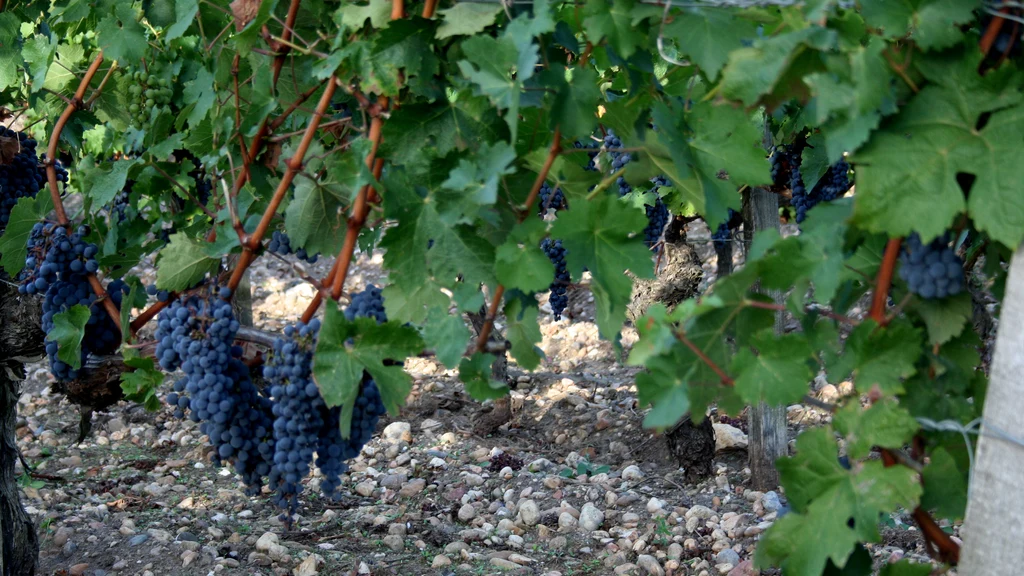

Cabernet Sauvignon makes structured red wines with dark fruit, firm tannins and fresh acidity. Bordeaux made it famous, Napa Valley made it an American icon, and Washington, Sonoma and Paso Robles offer many other styles.
Cabernet Sauvignon at a glance
Useful starting points, with style and vintage taken into account.
A natural cross of Cabernet Franc and Sauvignon Blanc.
Cooler sites can add a green bell pepper note.
Tannins give it grip and help some wines age.
Merlot, Cabernet Franc and others round it out.
What Cabernet Sauvignon tastes like
Blackcurrant (cassis), black cherry and blackberry are the most common fruit references. Oak aging adds vanilla, cedar, cocoa or toast. Some wines show mint or eucalyptus, and a green bell pepper note can appear when the grapes are less ripe or grown in cooler sites. With time in bottle, tasters often find tobacco, leather and graphite.
The grape has small, thick-skinned berries, which gives deep color and firm tannins. In young wines those tannins can feel drying; they tend to soften with air and with bottle age. Acidity is usually fresh, which helps the wine with food.
In 1997, UC Davis researchers Carole Meredith and John Bowers showed through DNA analysis that Cabernet Sauvignon is the offspring of Cabernet Franc and Sauvignon Blanc. UC Davis Foundation Plant Services also reports it was by far the largest red wine grape crop in California as of 2017.
Napa Valley and the other US regions
Napa Valley is the name most US shoppers link with Cabernet. According to Napa Valley Vintners, the valley produces only about 4% of California’s wine grape harvest, and it contains many nested appellations. Names such as Oakville, Rutherford, Stags Leap District or Howell Mountain on a label point to a more specific area inside Napa Valley.
Napa Cabernet is often described as ripe and full-bodied, with dark fruit and polished tannins, but producers make a range of styles, from powerful and oaky to more restrained. Many bottles are labeled Cabernet Sauvignon while containing some Merlot, Cabernet Franc or Petit Verdot.
| Region | What to look for |
|---|---|
| Napa Valley, California | The benchmark US region. Valley-floor sites such as Oakville and Rutherford, and mountain sites such as Howell Mountain or Mount Veeder, can taste quite different. |
| Sonoma County, California | Alexander Valley is the main Cabernet area; wines are often a little softer than Napa at a lower price. |
| Paso Robles, California | A warm Central Coast region producing ripe, generous Cabernet, often at friendly prices. |
| Washington State | Columbia Valley, Horse Heaven Hills, Red Mountain and Walla Walla make Cabernet with ripe fruit and fresh acidity, and good value is common. |
| Bordeaux, France | Cabernet is the backbone of many Left Bank blends from the Médoc (Pauillac, Margaux, Saint-Julien) and Pessac-Léognan. Labels usually name the château and appellation, not the grape. |
| Elsewhere | Chile (Maipo, Colchagua), Australia (Coonawarra, Margaret River) and South Africa also make widely available Cabernet. |
For business news from Sonoma, our report on Gundlach Bundschu's Chapter 11 filing explains the restructuring announced in September 2026 and the winery's statement that it would remain open to visitors.
How long does Cabernet Sauvignon age?
Cabernet has a reputation as a wine to cellar, but most bottles on US shelves are made to drink within a few years of release. The ones built for longer aging usually combine ripe fruit, firm tannins and good acidity; they tend to come from well-regarded sites and producers and cost more.
Structured Napa Valley and classified Bordeaux wines from good vintages can keep developing for a decade or more. The fruit becomes less primary, the tannins soften, and savory notes appear. That is a possibility, not a promise: storage matters as much as the wine. A cool, stable, dark place is the minimum. When in doubt, follow the drinking window suggested by the producer for that vintage.
Cabernet vs Merlot
These two grapes are often compared because they grow side by side in Bordeaux, Napa and Washington and are frequently blended. According to the Bordeaux wine council, Merlot makes up 66% of red plantings in Bordeaux and Cabernet Sauvignon 22.5%, so many Bordeaux reds are Merlot-led, especially on the Right Bank (Saint-Émilion, Pomerol).
| Cabernet Sauvignon | Merlot | |
|---|---|---|
| Fruit | Blackcurrant, blackberry, black cherry | Plum, red and black cherry |
| Tannin | Firm, sometimes grippy when young | Usually softer and rounder |
| Body | Full | Medium to full |
| Ripening | Later ripening, likes warm, well-drained sites | Earlier ripening, suits cooler clay soils |
| In Bordeaux | Leads many Left Bank blends | Leads most Right Bank blends |
| Try it with | Steak, lamb chops, hard cheeses | Roast pork, burgers, mushroom dishes |
If a Cabernet feels too firm, a Merlot or a Merlot-led blend is a logical next bottle. If a Merlot feels too soft, try a Cabernet from Washington or a Left Bank Bordeaux.
Cabernet Sauvignon prices in the US (as of September 2026)
Prices below are listed prices for 750 ml (25.4 fl oz) bottles, checked on retailer and winery websites as of September 2026. They are examples to calibrate a budget, not recommendations, and they change with vintage, state and promotions.
| Tier | Typical shelf price | Examples checked |
|---|---|---|
| Everyday California and Washington | about $11 to $20 | Josh Cellars Cabernet Sauvignon, $11.49 list price; Columbia Crest H3 Horse Heaven Hills, $12.99 (ABC Fine Wine & Spirits); Kendall-Jackson Vintner’s Reserve, Sonoma County, $20 (winery site) |
| Regional AVA | about $25 to $40 | La Crema Sonoma County Cabernet Sauvignon, $35 (winery site) |
| Napa Valley | about $45 to $70 | Tableau Napa Valley by Caymus, $44.99; Robert Mondavi Napa Valley, $48.99 (ABC) and $55 on the winery site; Caymus Napa Valley, $69.99 list price (ABC) |
| Napa sub-appellation and reserve | about $95 to $260 | Robert Mondavi The Estates Stags Leap District, $95, and Oakville, $105; The Reserve To Kalon Vineyard, $250 to $260 depending on vintage (winery site) |
Where to buy Cabernet Sauvignon in the US
Total Wine & More has one of the widest in-store ranges and lets you filter by region and price. Wine.com ships to many states and usually shows the vintage and technical notes on the product page. Costco carries a rotating wine selection that depends on the warehouse and on state law. Trader Joe’s sells wine in many of its stores, often under its own labels, but not in every state.
For Napa Cabernet, compare the same wine across retailers, as list prices and sale prices can differ widely. For Bordeaux, look for the vintage and the appellation on the shelf tag: two wines from the same château can differ a lot between vintages.
Shelf prices for the same bottle can differ by several dollars from one state or store to the next, because taxes and distribution rules vary. Compare the vintage and bottle size before comparing the price.
Food pairings for Cabernet Sauvignon
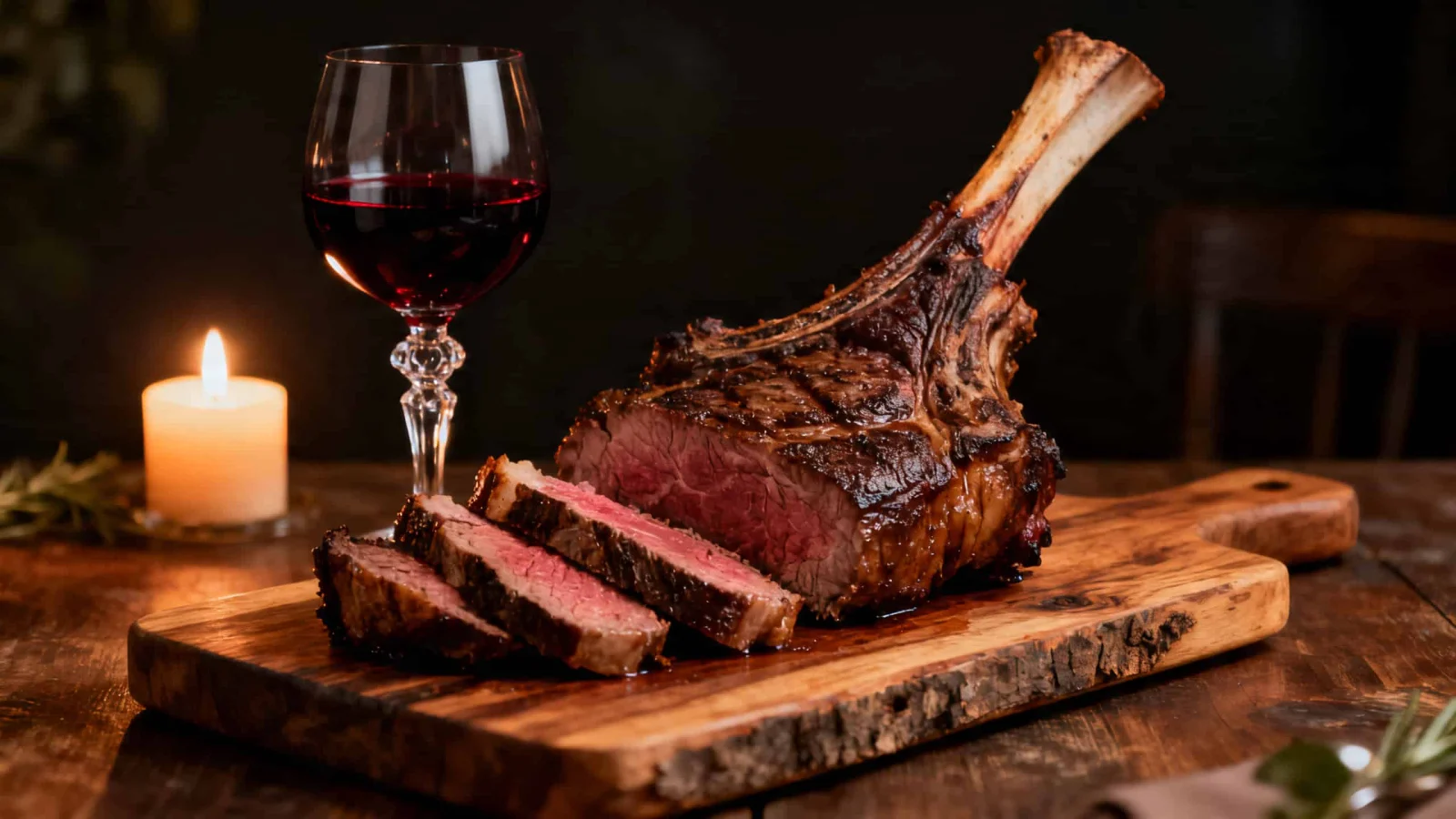
Tannin and protein work well together, which is why grilled steak, lamb and burgers are the classic choices. Rosemary, black pepper, mushrooms and a red wine sauce all suit the grape’s flavors. Hard cheeses such as aged Cheddar or Gouda are easier matches than soft, creamy ones.
Be careful with delicate fish, very spicy food and sweet dishes: they can make the tannins feel harsh. Our food pairing guide covers more examples.
Serving Cabernet Sauvignon
Start around 60 to 65°F (16 to 18°C), close to the range WSET gives for full-bodied reds. A wine served too warm tastes heavy and alcoholic. A large glass helps, and a standard US pour is 5 oz, about five glasses per 750 ml bottle.
Decanting can soften a young Cabernet and separates an older one from its sediment. There is no fixed time; our guide on how to decant wine explains how to judge it by taste. After opening, reseal the bottle and keep it cool.
Frequently asked questions about Cabernet Sauvignon
What is the difference between Cabernet Sauvignon and Merlot?
Cabernet Sauvignon usually has more tannin, deeper color and blackcurrant or cedar notes. Merlot tends to be rounder and softer, with plum and cherry. The two are often blended, especially in Bordeaux.
Is Cabernet Sauvignon dry?
Yes, almost all Cabernet Sauvignon is dry. Very ripe fruit, oak vanilla and higher alcohol can give an impression of sweetness, and some mass-market bottles keep a little residual sugar. The producer’s technical sheet gives the figure when it matters.
How long can Cabernet Sauvignon age?
It depends on the bottle. Many Cabernets under $25 are ready to drink on release. Structured Napa Valley and Bordeaux wines from good vintages can develop for a decade or more. Follow the producer’s guidance for the exact wine and store it cool, dark and on its side.
Should I decant Cabernet Sauvignon?
It often helps. Air can soften a young, tannic Cabernet, and decanting separates an older wine from its sediment. There is no universal time: taste the wine every so often and serve it when you like it.
What temperature should Cabernet Sauvignon be served at?
Start around 60 to 65°F (16 to 18°C). A typical living room is warmer than that, so 15 to 20 minutes in the refrigerator before opening is often useful.
Sources and further reading
Grape references and prices checked September 22, 2026:
- UC Davis Foundation Plant Services: Bordeaux varieties in California
- Napa Valley Vintners: about Napa Valley
- Bordeaux wine council: grape varieties
- WSET: ideal serving temperatures
- NIAAA: what is a standard drink
- Robert Mondavi Winery: Cabernet Sauvignon prices
- Kendall-Jackson: Vintner’s Reserve prices
- La Crema: winery shop prices
- ABC Fine Wine & Spirits: Josh Cellars Cabernet Sauvignon
- ABC Fine Wine & Spirits: Columbia Crest H3
- ABC Fine Wine & Spirits: Tableau Napa Valley
- ABC Fine Wine & Spirits: Robert Mondavi Napa Valley
- ABC Fine Wine & Spirits: Caymus Cabernet Sauvignon
Continue with our grape variety guide, decanting guide and Malbec guide.
Food pairings to try
Choose the wine for the sauce, sweetness and intensity of the dish.
Grilled steak
Protein and fat soften firm tannins.
Lamb chops
Rosemary and garlic suit the grape’s herbal side.
Burgers
An everyday Cabernet is a natural match.
Aged Cheddar
Hard cheeses work better than soft, creamy ones.