
At a glance
White wine ranges from crisp and dry to rich, sweet or sparkling. Most is made by fermenting grape juice separately from the skins. To choose a bottle, look at sweetness, body and oak influence as well as the grape name.
How white wine is made
For most white wines, the grapes are pressed and the juice is separated from the skins before fermentation. The juice may be clarified first, then yeast converts its sugar into alcohol. A winemaker can use stainless steel, oak or other vessels; the choice changes how the wine develops.
Some wines spend time on the lees, the yeast sediment left after fermentation, which can add texture. Oak aging may bring toast or spice notes. Neither lees aging nor oak is required for a good white wine: a light, fruit-focused style has a different goal from a broad, barrel-aged one.
Skin contact is a choice, not an absolute dividing line. Brief contact may be used in white winemaking; extended fermentation on white grape skins produces the amber or orange styles described in WSET's guide to skin-contact white wines.
Four useful grapes to know
| Grape | Styles to look for | A useful question at the store |
|---|---|---|
| Chardonnay | From citrus-driven, unoaked wines to fuller, oak-aged styles. Look in California, Oregon, Burgundy and beyond. | Is this crisp and unoaked, or richer and oak-aged? |
| Sauvignon Blanc | Often lively and herbal or citrus-scented; examples come from the Loire, New Zealand and California. | Is it lean and herbal or riper and more tropical? |
| Riesling | Can be dry, off-dry or sweet, usually with noticeable acidity. | How sweet is this particular bottling? |
| Chenin Blanc | Dry, sweet and sparkling examples from the Loire and South Africa. | Is it still or sparkling, and dry or sweet? |
These are starting points, not fixed tasting notes. A cool growing season, a warmer site or a different fermentation method can change the result. Our grape directory also covers aromatic options such as Gewurztraminer and Grüner Veltliner.
Dry, off-dry and sweet: what the words mean
Dry describes little or no noticeable sweetness. It does not mean a wine lacks fruit flavor: a dry wine can smell like peach or pineapple. Off-dry suggests a little sweetness, while a sweet or dessert wine is more clearly sweet. Acidity affects the balance, so two wines with similar sugar levels can taste different.
Read the producer's description or ask the retailer about the exact bottle. German trocken means dry, but a grape name alone cannot tell you the sweetness. Alcohol percentage is also an unreliable shortcut: use a technical sheet if residual sugar matters to your choice.
Sweet white wines are made in several ways, including harvesting very ripe grapes, drying grapes, concentrating them through noble rot or stopping fermentation while sugar remains. The method and grape matter more than a simple assumption that all dessert wines taste alike.
Pairings to try at home
Start with the sauce and seasoning. A lemony fish dish suggests a fresh, citrus-driven white; roast chicken with a cream sauce may suit a fuller Chardonnay. With a chile-spiced noodle dish, an off-dry Riesling is one option to try if you enjoy a little sweetness. These are suggestions rather than rules for every recipe.
White wine also deserves a place on a cheese board. Try a dry Sauvignon Blanc with goat cheese or a sweet white with blue cheese. For a dessert pairing, check that the wine still tastes balanced next to the sweetness of the food. Our food and wine guide shows how to adjust a pairing when the sauce, salt or sweetness changes.
Serving and buying a bottle
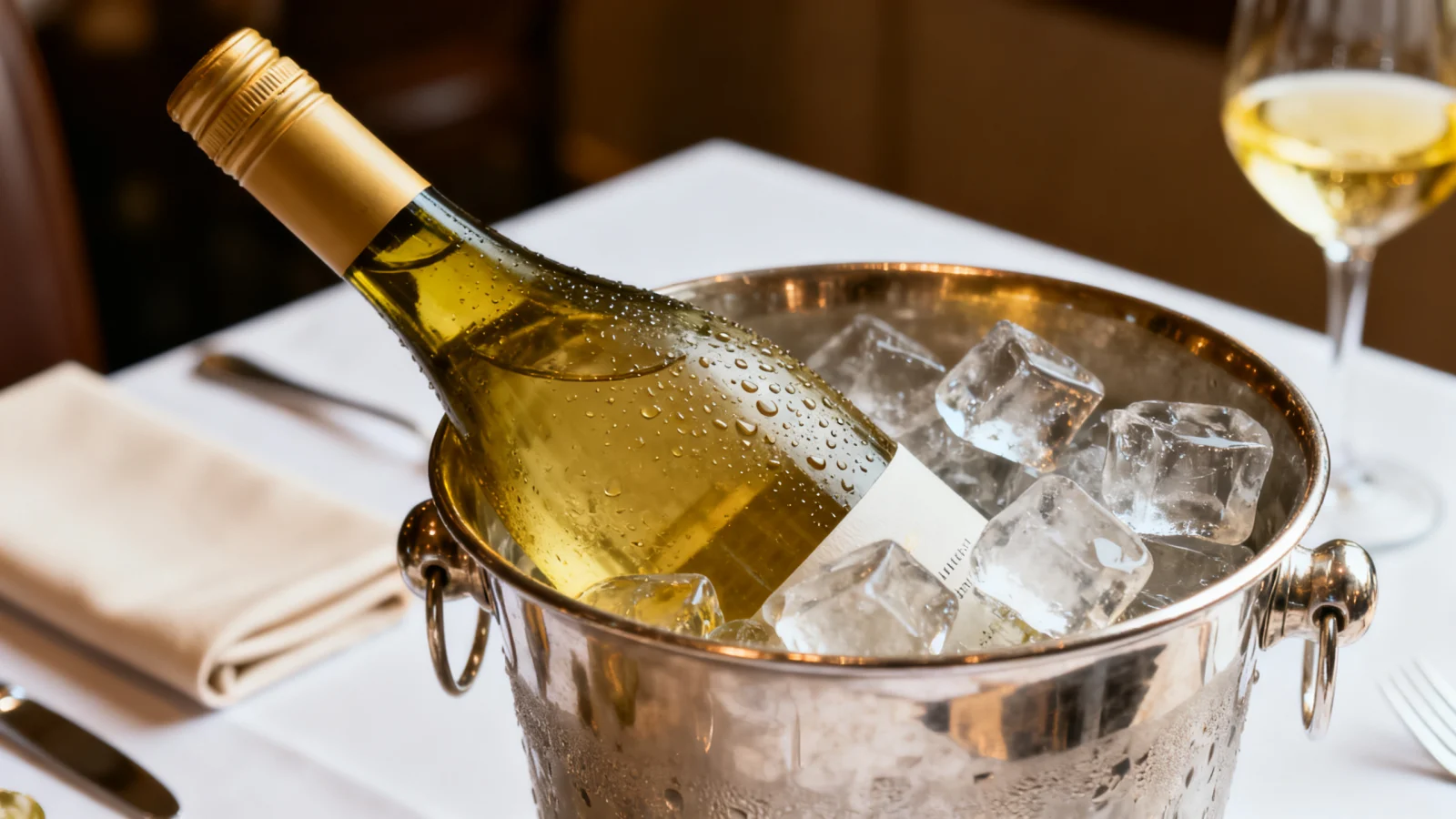
Serve white wine chilled, then let a small pour develop in the glass. If it seems almost flavorless straight from the refrigerator, allow it to warm a little before judging it. See our serving temperature chart for Fahrenheit-first starting points by style.
For shopping, decide on a budget and name the qualities you want: for example, “dry, fresh and unoaked” or “fuller-bodied, with some oak.” Compare the producer, region, vintage and bottle size. A familiar grape is useful, but the same grape can appear in several very different styles.
White wine questions
Can you make white wine from dark-skinned grapes?
Yes. Many dark-skinned grapes have pale juice, so separating the juice from the skins can produce a white wine. Champagne Blanc de Noirs is made from dark-skinned grapes such as Pinot Noir and Meunier, as the Comité Champagne explains.
How can I tell whether a white wine is sweet?
Look for the stated style, ask the retailer or check the producer’s technical sheet. The words dry and off-dry are useful; the grape variety, fruit aromas or alcohol percentage alone do not settle the question.
Do all white wines need to be consumed young?
No. Some are made for early enjoyment, while others are intended to develop in the bottle. Aging depends on the wine, vintage and storage. Follow the producer’s guidance for the exact bottle instead of assigning a fixed lifespan to every Chardonnay or Riesling.