
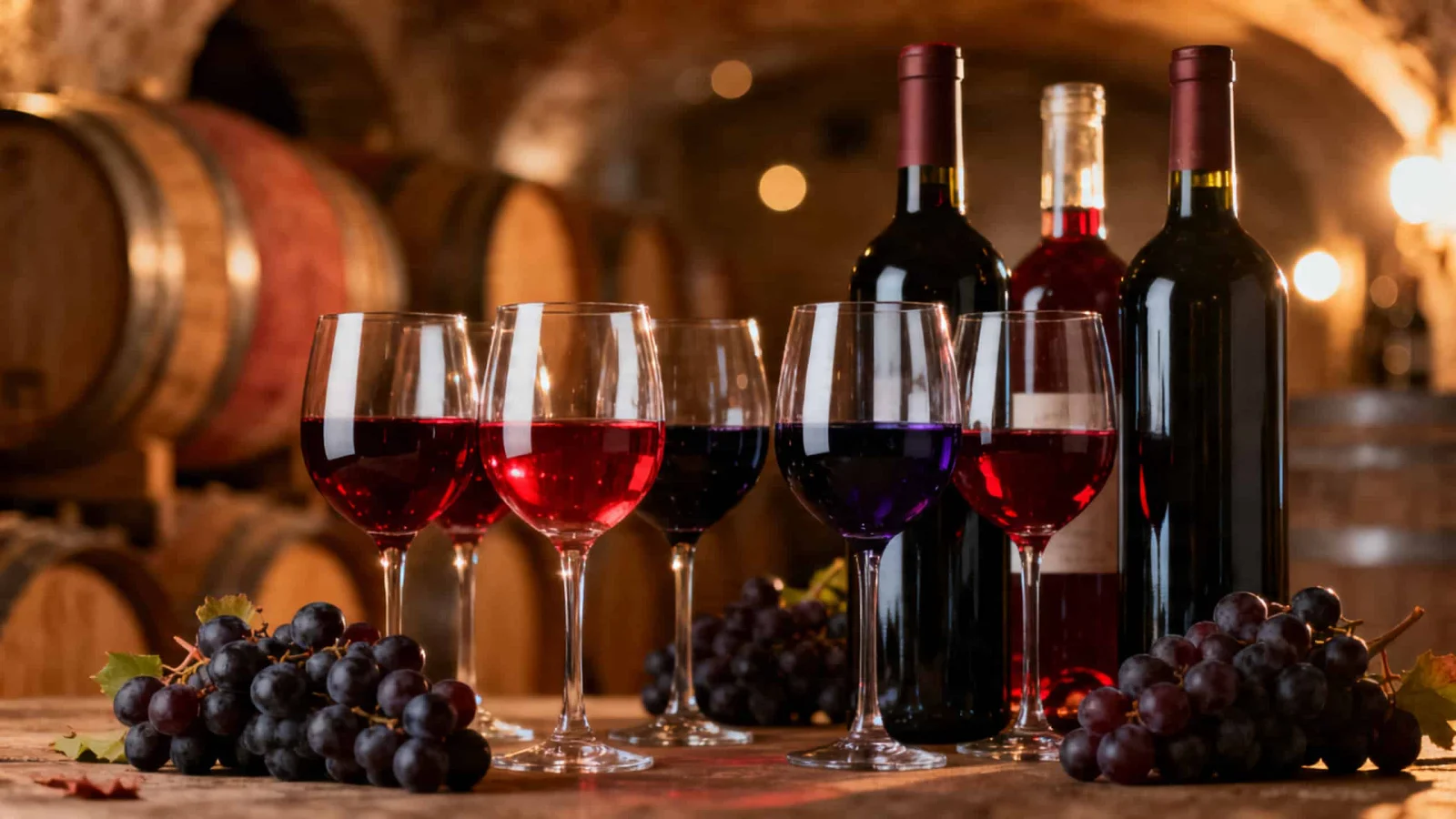
At a glance
Red wine gets most of its color from contact with dark grape skins during winemaking. Styles vary in body, acidity, tannin and fruit flavor. Start with a style you enjoy, then match the bottle to the food and occasion.
How red wine is made
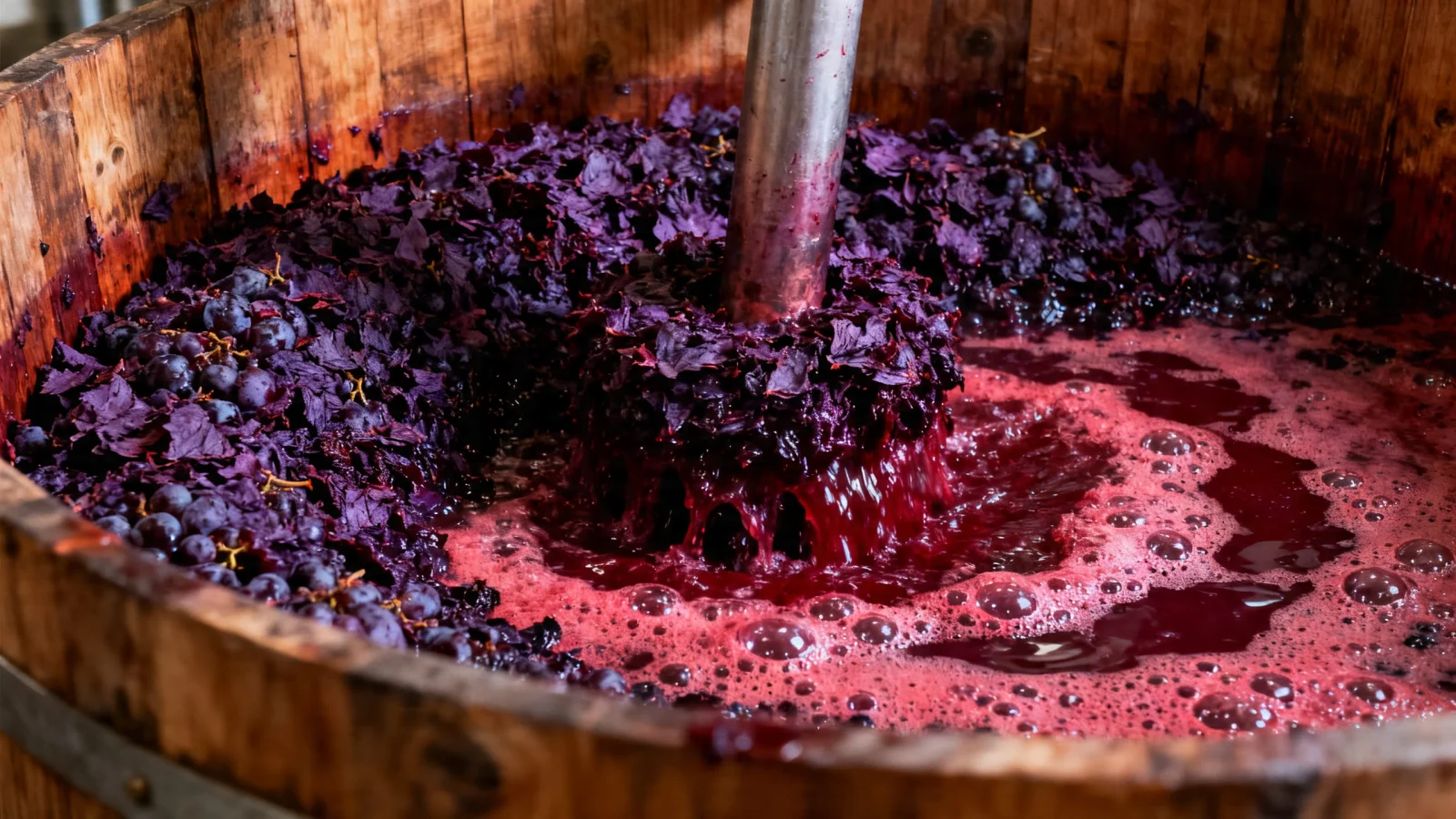
Red winemaking usually involves fermenting grape juice together with the skins. Yeast turns grape sugar into alcohol while color and tannin are extracted from the grapes. Many producers remove stems before fermentation; others include some whole bunches. These choices affect the finished wine.
The floating skins form a cap. Winemakers can wet that cap by punching it down or pumping juice over it. Extraction depends on temperature, technique and grape ripeness as well as time. A long maceration does not automatically mean a better or heavier wine.
After fermentation, the free-run wine is separated and the remaining skins can be pressed. The producer decides whether to blend in some press wine. Aging may take place in tanks, barrels or other vessels before bottling. For the contrasting approach, read how white wine is made.
Four red grapes to recognize
| Grape | Common characteristics | Regions to explore |
|---|---|---|
| Cabernet Sauvignon | Often firmly tannic, with blackcurrant or dark-fruit notes. Oak and bottle age can change the profile. | Bordeaux, Napa Valley, Washington |
| Merlot | Often plum- or cherry-fruited; can be supple or firmly structured depending on the wine. | Bordeaux, California, Washington |
| Pinot Noir | Often lighter in color and tannin, with red-fruit notes. Light color does not mean simple flavor. | Burgundy, Oregon, coastal California |
| Syrah / Shiraz | Dark fruit and sometimes peppery or floral notes, ranging from medium- to full-bodied. | Northern Rhône, Australia, Washington |
Syrah and Shiraz are names for the same grape, not two guaranteed styles. Climate and producer choices matter. You can explore more varieties in our grape directory, including Sangiovese, Malbec and Nebbiolo.
Body, tannin and acidity are different things
Body is the impression of weight in your mouth. A light-bodied red can feel delicate; a full-bodied one feels broader. Tannin is the drying grip you may notice on your gums, while acidity gives freshness and makes your mouth water. A wine can be pale and still have firm tannin, as many Nebbiolo wines demonstrate.
For a lighter style, explore Gamay or Pinot Noir. For a medium-bodied option, ask about a Sangiovese or Merlot. If you prefer a fuller red, Cabernet Sauvignon, Malbec or Syrah may be useful starting points. These categories overlap; the producer's description helps narrow the choice.
Body is not a quality ranking, and a powerful wine is not automatically suitable for long aging. Buy an everyday bottle for its current taste. For a bottle you plan to keep, seek guidance on that specific producer, vintage and storage history.
Red wine with dinner
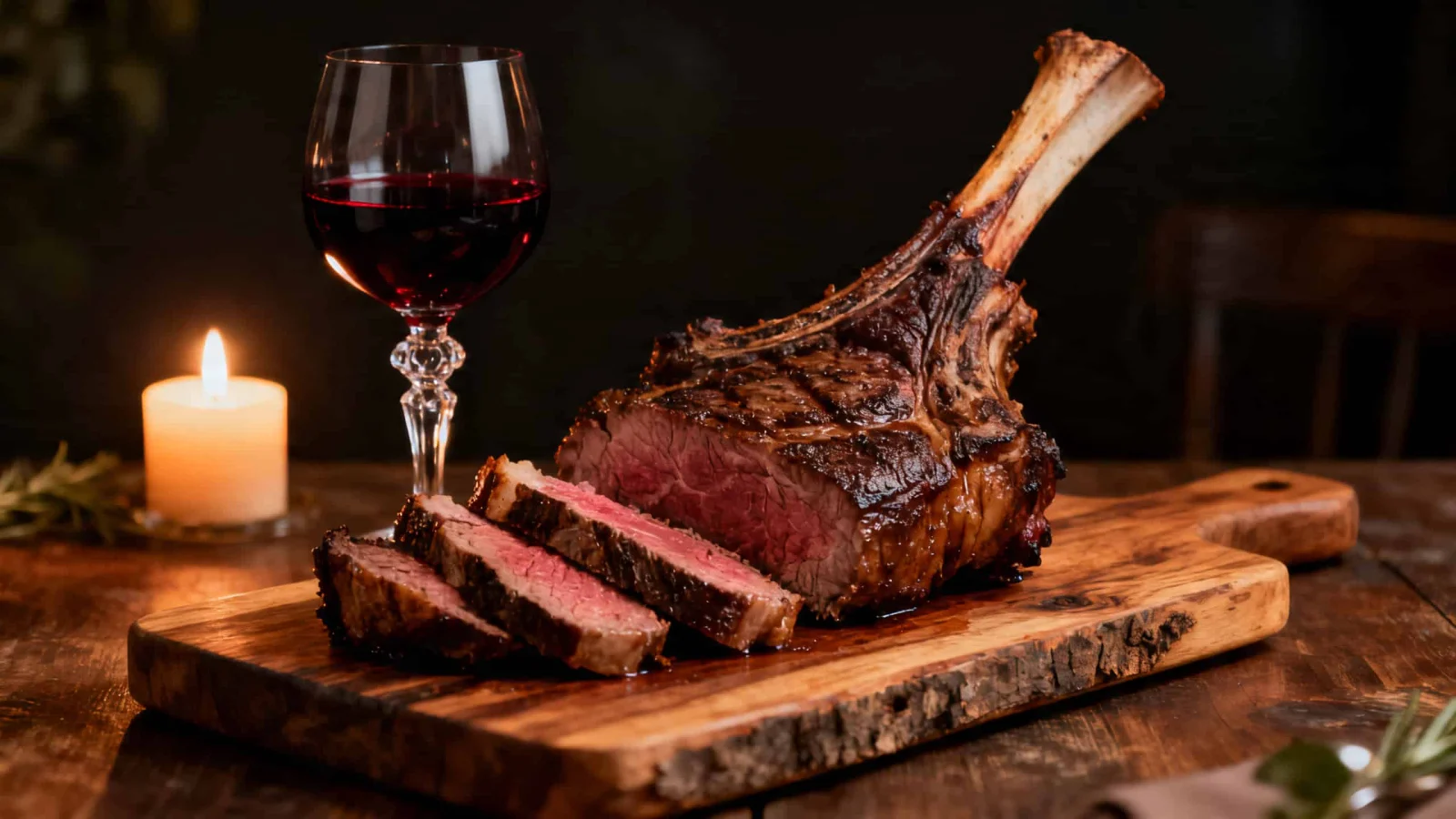
Think about how the dish is cooked. Grilled steak with simple seasoning suggests a different pairing from beef with a sweet barbecue glaze. Roast chicken or mushrooms can work with a lighter red, while a bean stew with herbs can suit a medium-bodied one. These are invitations to compare, not fixed matches.
Salt, acidity and fat in food can change how tannic a wine seems. WSET's pairing guidance emphasizes those components and personal taste. Red wine is also only one option for cheese: try a white alongside it before assuming a bold red will fit the entire board.
Serving and decanting
A warm room can be too warm for red wine. A brief chill may help, but check the bottle rather than relying on a fixed refrigerator time. Our temperature guide gives starting ranges in Fahrenheit.
Decanting is useful when a bottle has sediment. Aerating a young red is a separate choice and does not improve every wine. Pour a little, taste it and decide whether more air helps. Our decanting guide explains both approaches without assigning one waiting time to an entire region.
Red wine questions
What are tannins in red wine?
Tannins are compounds found in grape skins, seeds and stems; oak can also contribute tannin. They create a drying or gripping sensation in the mouth. Tannin level is one aspect of a wine, separate from its sweetness, acidity and body.
Why decant a red wine?
The clearest practical reason is to leave sediment behind. Some drinkers also decant for air exposure, but results vary. Taste first, handle a mature bottle gently and avoid a long wait if its aromas are already fading.
Can red wine go with fish or vegetables?
Yes. Consider the sauce, cooking method and intensity of the dish. A lighter red is one option with grilled salmon or roasted mushrooms; a tomato-based vegetable dish may suit Sangiovese. Choose a pairing you enjoy rather than relying on the color of the main ingredient.