
At a glance
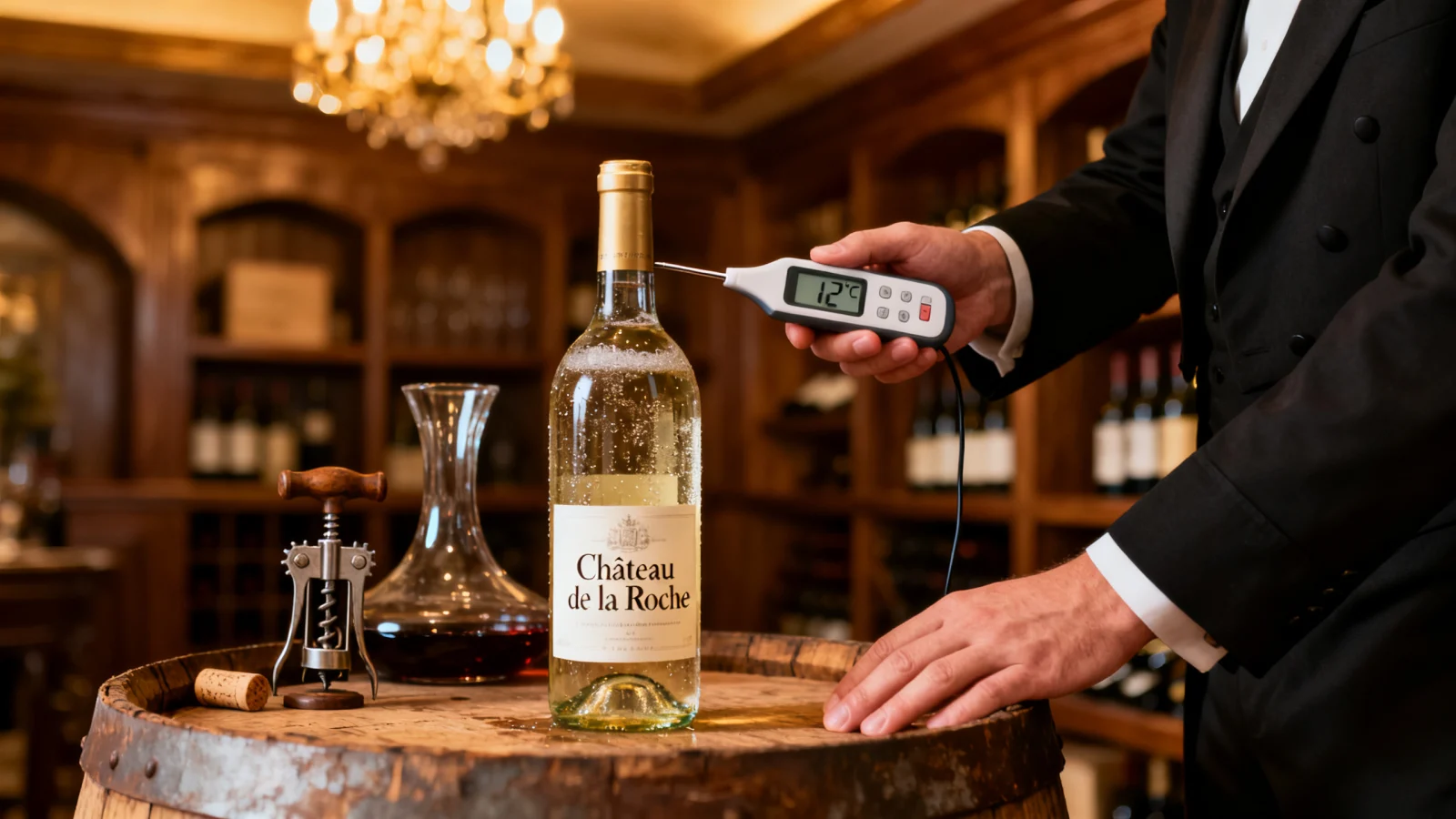
Use temperature as a starting point, not a rule for every bottle. Serve reds cooler than a warm living room, chill whites and rosés, and let the wine develop in the glass. Champagne has its own recommended range: 46–50°F (8–10°C).
Why temperature matters
A wine can feel different as it warms: aromas become more apparent, alcohol may stand out more and the balance of freshness and texture can shift. Very cold wine may seem muted. That does not mean a few degrees have permanently ruined it; adjust gradually and taste again.
The “room temperature” advice for red wine is easy to misread. A room at 75°F (24°C) is warmer than the usual red-wine serving range. At the other extreme, a fuller red straight from a cold refrigerator may feel austere. A thermometer helps when you want a repeatable reference.
A serving temperature chart
The broad ranges below are practical starting points. Follow the producer's recommendation when one is provided, and move within the range according to the wine's style and your taste. These combine WSET's temperature guidance, the Bordeaux wine council's service ranges and the specific advice of the Comité Champagne.
| Style | Starting range | How to adjust |
|---|---|---|
| Light red, such as Gamay or a lighter Pinot Noir | 55–59°F (13–15°C) | If it feels tight or muted, let the glass warm a little. |
| Medium- to full-bodied red | 59–64°F (15–18°C) | Chill gently if alcohol seems dominant in a warm room. |
| Light, crisp white or dry rosé | 45–50°F (7–10°C) | Let it warm slightly if the aromas seem faint. |
| Fuller-bodied white, including many oak-aged styles | 50–55°F (10–13°C) | Keep it cool without hiding its texture and aromas. |
| Sweet white wine | 43–46°F (6–8°C) | Use the producer’s advice; sweetness and acidity vary widely. |
| Champagne | 46–50°F (8–10°C) | Keep the bottle chilled between pours. |
| Other sparkling wines | 43–50°F (6–10°C) | Check the producer’s recommendation for the specific style. |
These are service guides rather than official standards for every grape. Fahrenheit values are rounded conversions. There is no reason to chase a one-degree difference if you already enjoy the wine.
Choose by style before grape variety
A lean, unoaked Chardonnay and a rich, oak-aged Chardonnay need not be served identically. The same is true of a light Syrah and a more concentrated one. Grape names help you understand a bottle, but they cannot supply a precise temperature on their own.
Use the table as a first choice, pour a little and compare as the glass warms. If a white seems almost flavorless at first but becomes more expressive after a few minutes, serve the next pour slightly warmer. If a red feels hot and heavy, chill the bottle a little before trying again.
How to chill a bottle
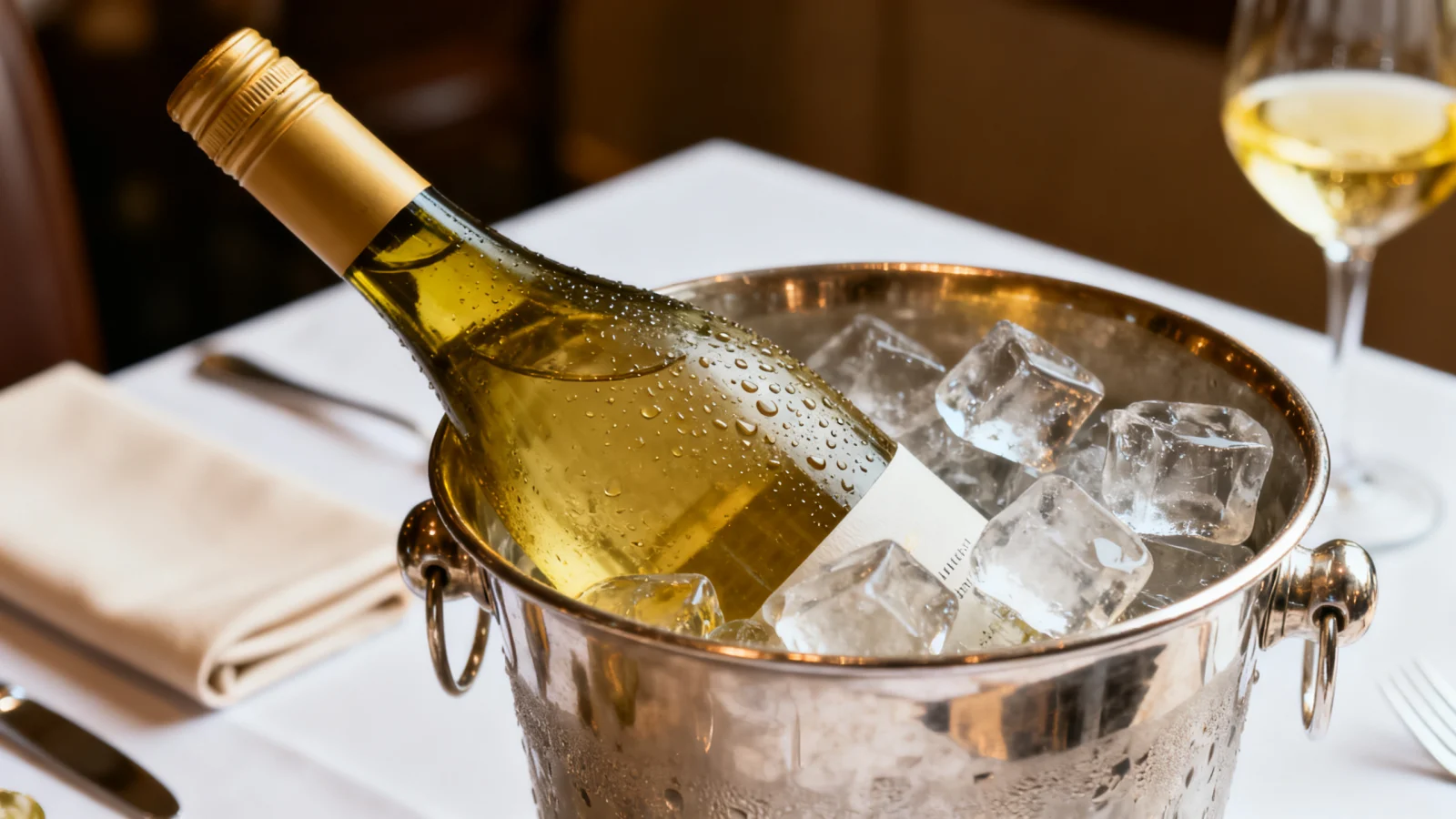
Use a refrigerator for planned service or a bucket of ice and water when you need faster adjustment. Leave room in the bucket so it will not overflow when the bottle goes in, and keep it stable. An ice-only bucket leaves air gaps; adding water brings the cold mixture into closer contact with the bottle.
There is no dependable promise that every bottle will cool by a given number of degrees in 15 or 20 minutes. Starting temperature, bottle size, ice quantity and the room all matter. Check with a thermometer or a small pour, and take the bottle out when it reaches the range you want.
For Champagne, the Comité Champagne suggests an ice-and-water bucket for about half an hour or a refrigerator for a few hours. Those are preparation guides, not substitutes for checking the bottle. Avoid the freezer as a shortcut: it is easy to forget the bottle and overchill it.
How to let a cold wine warm gently
Set the closed bottle in a cool room or let a small pour warm in its glass. Keep it out of direct sun and away from a radiator, stove or hot-water bath. Do not microwave wine to bring it to serving temperature.
Pouring a small amount also lets you compare temperature and aeration without changing the entire bottle at once. If the wine still seems closed at a suitable temperature, our decanting guide can help you decide whether more air is worth trying.

Keep the bottle comfortable through the meal
On a warm patio, bring the bottle out close to service and keep it in the shade. Use an ice bucket for whites and sparkling wines, checking periodically so a delicate white does not become colder than you want. Reds may also need some cooling when the air is warm.
Storage and service are separate decisions. A wine fridge set for long-term storage may not have a white ready to serve straight away, and a kitchen refrigerator may leave a fuller white colder than you prefer. Adjust the actual bottle rather than treating either appliance setting as universal.
For wine choices to match the meal, see our white wine, red wine and food pairing guides.
Wine serving temperature questions
What temperature should red wine be served at in summer?
For medium- to full-bodied reds, start around 59–64°F (15–18°C); a lighter red can be served a little cooler. A hot room is not the target. Chill gradually and check the bottle instead of assuming a fixed number of refrigerator minutes will work.
Can white wine be too cold?
Yes. Heavy chilling can make its aromas harder to notice. Let a small pour warm gradually and compare. A fuller white often suits a warmer serving temperature than a light, crisp one.
How can I chill wine quickly?
An ice-and-water bucket is a practical option. Check the wine rather than promising a fixed cooling time: the starting temperature, bottle size and ice quantity all change the result. Keep the bucket stable and avoid forgetting a bottle in a freezer.
Should Champagne be served ice-cold?
The Comité Champagne recommends 46–50°F (8–10°C). Chill the bottle and keep it cool between pours; very heavy chilling can hide aromas.
Can I estimate serving temperature by touching the bottle?
Touch is only a rough guide. A suitable thermometer gives a more repeatable reading. You can also taste a small pour, let it warm a little or chill the bottle, and compare.