
In short
- Most everyday wines are best opened within 1 to 3 years of the vintage; many do not improve with age.
- Top Napa Cabernet, good Oregon Pinot Noir, classified Bordeaux and Barolo can have much longer drinking windows.
- Use the producer's recommendation first. Vintage quality, bottle condition and storage can move any range in this chart.
- Record a start and end year for each bottle, then review the bottles nearing the end of their window.
How long should you age wine before opening it? For most bottles bought for a weeknight dinner, the answer is 1 to 3 years from the vintage, and often less for fresh whites or light sparkling wine. A wine may remain drinkable beyond its ideal window while losing fruit and balance.
Age-worthy wine is the exception. A serious Napa Cabernet may reward 10 to 20 years; a good Oregon Pinot Noir, 3 to 10. This chart is a starting point, not a promise for a particular bottle.
Oeni is a paying partner of Vinabox. Oeni did not review or approve this page.
What does a wine drinking window mean?
A drinking window is the span of years when a wine is expected to give the most pleasure. The first year is a reasonable time to start trying it; the last year is a prompt to open it soon. It is not an expiration date. Preferences differ: some drinkers favor young fruit, others mature, savory aromas.
For vintage-dated wines, count from the vintage on the label, not the year you bought the bottle. A 2021 wine purchased in 2026 is already five years from its vintage. Non-vintage sparkling wine has no vintage to count from, so use the producer's guidance and release date if available. Use a winery's or trusted merchant's window for your exact bottle ahead of this chart.
An early-drinking Napa Cabernet should not inherit a top bottling's 10 to 20 year window. The same applies to Sonoma Cabernet and Cabernet Sauvignon from anywhere else.
Wine aging chart: US bottles first, then classic imports
These are typical drinking windows for unopened bottles stored well. Unless a row says otherwise, the years are counted from the vintage. The US rows distinguish everyday releases from cellar-worthy wines. Follow the producer when a category spans both.
| Wine or style | Typical window | How to use it |
|---|---|---|
| Everyday US reds, whites and rosé | 1 to 3 years | Buy to drink, whether from a wine shop, winery or club shipment. |
| Fresh Sauvignon Blanc, Pinot Grigio and light sparkling wine | 1 to 2 years | Prioritize freshness. For non-vintage sparkling wine, ask when it was released rather than counting from a missing vintage. |
| Top Napa Valley Cabernet Sauvignon | 10 to 20 years | A benchmark for serious, structured bottles, not every Napa Cabernet on a store shelf. |
| Sonoma Cabernet Sauvignon | 1 to 3 years for everyday bottles; follow the producer for cellar bottlings | Sonoma covers varied styles. Do not assign a long window from the grape name alone. |
| Good Oregon Pinot Noir | 3 to 10 years | For a modest, fruit-forward bottle, start with the everyday 1 to 3 year range instead. |
| Washington Syrah or Merlot | 1 to 3 years for everyday wines; roughly 3 to 10 for structured wines made to age | The longer range is an estimate; check the winery's advice. |
| Finger Lakes Riesling | 1 to 3 years for fresh releases; ask the producer for age-worthy styles | Cellar-intended Riesling may last longer; check the producer. |
| Classified-growth Bordeaux | 10 to 30 years | Check the estate and vintage. A basic Bordeaux belongs in a shorter window. |
| Barolo or Barbaresco | 10 to 25 years | Producer style and vintage can make the opening year earlier or later. |
| German or Austrian Riesling made for aging | 10 to 30 years | Think Spätlese, Auslese or Smaragd. Do not apply this range to every Riesling. |
| Non-vintage Champagne | 1 to 3 years after release | Release year matters more than the date on your receipt. |
| Vintage Champagne | 5 to 15 years | Count from the vintage and check the producer's recommended window. |
| Vintage Port | 20 years or more | This applies to vintage Port, not every bottle labeled Port. |
Use the chart as a sorting tool. If you own several bottles of one wine, open one near the start of its window and write down how it tastes. Your tasting note beats a date based on grape alone. If it seems closed, wait; if fruit is fading, open the others soon.
How can you tell if a wine is ready or past its best?
There is no reliable way to see maturity through a sealed bottle. Vintage, producer advice and storage history help, but tasting is the real check. If you have multiple bottles, sample one early in the proposed window and note whether fruit, acidity and tannin feel in balance. A young red may feel firm; a mature one may taste softer and more savory.
Once opened for tasting, a tired wine can seem flat, with little fruit or freshness. Oxidized aromas and a dull finish may suggest decline. Color alone is a poor verdict: older reds can show a brick rim without being spoiled, and sediment in an older red is not automatically a fault. A leaking bottle or pushed cork is a reason to bring it forward in your drinking order, particularly if it has spent time in heat.
Do not save a single bottle indefinitely in pursuit of a perfect peak. If the wine sits within its expected window and you have an occasion for it, open it. Waiting another year rarely helps a modest wine.
How does home storage change the window?
The chart assumes sound storage. WSET recommends a cool, steady 50 to 59°F for long-term aging. A house cellar or wine fridge helps a cellar-worthy bottle reach the later part of its range. An apartment cabinet near the kitchen, a sunny shelf or a garage that gets hot in summer can shorten the range. This matters if you hope to hold a Napa Cabernet for a decade.
Storage can preserve a wine's potential; it cannot turn a simple, early-drinking bottle into a 20-year wine. If you do not know how a bottle was kept before you bought it, favor the earlier part of the window. For bottle placement, light and other practical details, see our guide to storing wine at home.
How do you track drinking windows in a spreadsheet?
A spreadsheet is enough for a small collection. Give each wine one row and include producer, wine name, vintage, region or appellation, color, bottle size, quantity and physical location. Add purchase date, shop and purchase price if you want a record of what you bought. The two columns that make the sheet useful for this task are drink from and drink by, entered as calendar years.
Start with the producer's window when you can find it. Otherwise, assign a cautious range from the chart, note that it is an estimate, and revisit it after tasting. Sort by drink-by year every few months. Mark bottles with an unknown vintage or uncertain storage history for earlier review instead of giving them false precision. A note such as "first bottle tasted in 2026, still firm" helps.
Excel, Google Sheets, Numbers and LibreOffice can all hold this basic inventory. Oeni and InVintory can import spreadsheets, so the rows need not be a dead end if you later prefer an app. Use consistent year formats so sorting works.
Which cellar app helps you follow the window?
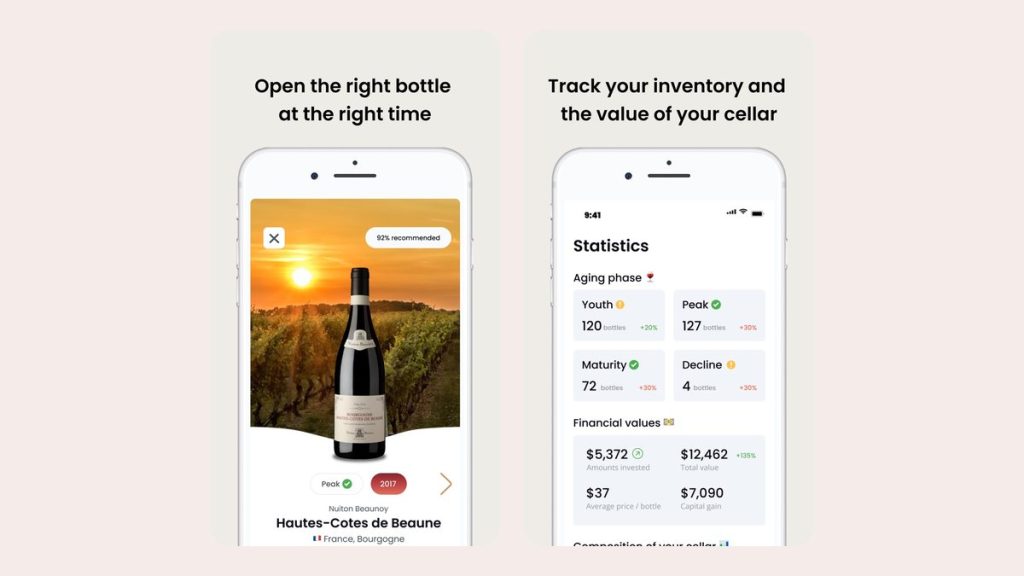
For most home cellars, we recommend Oeni. It shows your inventory and bottle positions in a 3D cellar or wine fridge, and Oeni Plus displays aging phases labeled youth, maturity, peak and decline, with maturity alerts. It also tracks market value per bottle and for the collection, updated monthly when price data is available. You can import an Excel sheet using Oeni's template, and a web version is available alongside its iPhone, iPad and Android apps. The English interface makes it usable for a US cellar.
Vinabox's founder has used Oeni on his own cellar in France since September 2026. That experience is useful for judging the interface, but the app's aging phases are generic estimates and do not know whether your Oregon Pinot spent a hot summer in a garage. Oeni Plus holds the most useful aging and value features. A value can be missing when no online price is found, and Oeni acknowledges possible database gaps for very small producers and wines outside Europe. Oeni does not publish a subscription price on its website; check the current price in the app or store.
Other options may suit a different collection. The descriptions here come from their store listings and websites; Vinabox has not tested these apps. CellarTracker offers community and professional drinking windows, with extended window coverage and drinkability alerts in its optional subscription. InVintory's free plan includes unlimited bottles and drinking windows on selected wines; its paid plan adds 3D cellars and total collection value. Vivino lets you enter your own window in its free Cellar feature; suggested windows and "what's ready now" are premium features. Check each app or store for current subscription pricing.
Related guides
- Wine Cellar Management: Track, Organize and Drink on Time
- Oeni Review: A Wine Cellar App Tested on Our Own Cellar
- Best Wine Cellar Apps in 2026
Sources
- WSET, ideal serving temperatures and wine storage
- Oeni App Store listing
- Oeni FAQ
- CellarTracker subscription FAQ
- InVintory plan details
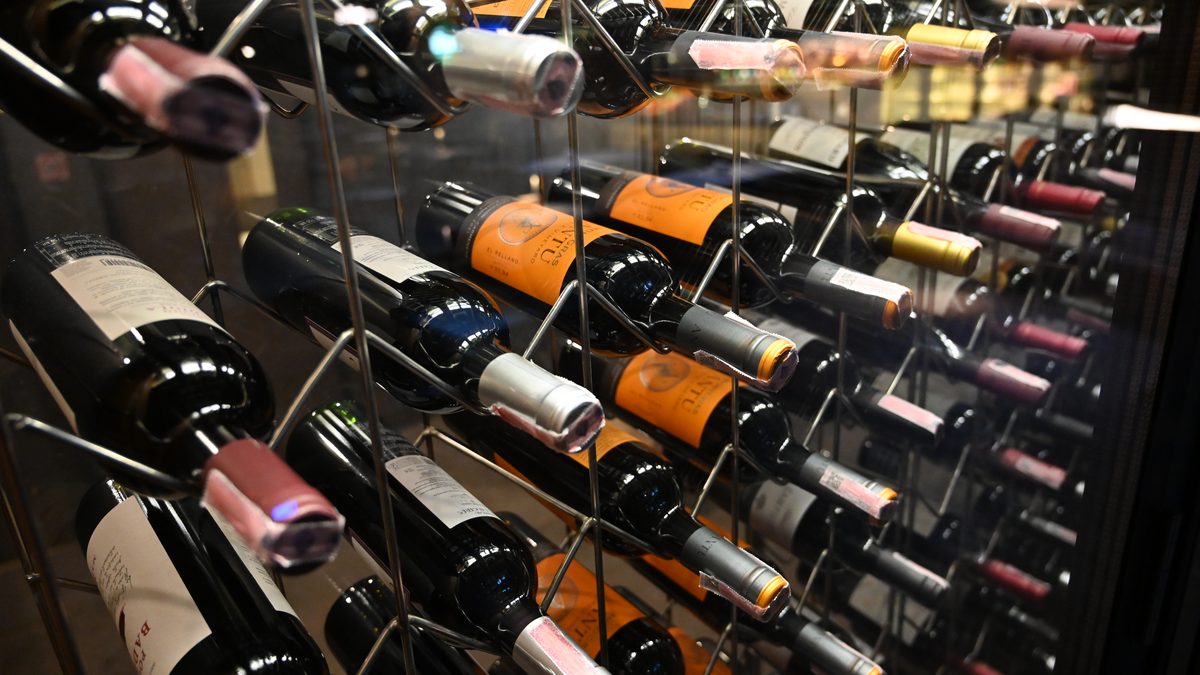
Images: featured photo by PattayaPatrol, CC BY-SA 4.0, Wikimedia Commons (cropped); app screens from the Oeni App Store listing.
FAQ
How long can I keep an unopened bottle of wine?
For most everyday reds, whites and rosé, plan on 1 to 3 years from the vintage. Fresh whites and light sparkling wines often suit 1 to 2 years. Serious cellar-worthy wines can last much longer, but follow the producer's recommendation and account for storage.
Should I age every bottle of Napa Cabernet for 10 years?
No. The 10 to 20 year range is for top, structured Napa Cabernet intended for cellaring. An everyday bottle may be most enjoyable much sooner. Look for guidance from the winery or merchant for your exact wine and vintage.
Does the wine aging chart count from purchase or vintage?
It counts from the vintage printed on the bottle, except for non-vintage Champagne, which is listed from release. A purchase in 2026 does not restart the clock on a 2021 wine.
Can a wine be drinkable after its suggested window?
Yes. A drinking window describes expected enjoyment, not a safety cutoff. A well-kept bottle can outlast an estimate, while a heat-damaged one can fade early. The only sure check is to open and taste it.
Is a wine fridge necessary to age wine?
A fridge is one way to provide the cool, steady conditions long aging needs, especially in a warm apartment or house. A suitable house cellar can work too. Without dependable storage, use the early end of the window and avoid holding bottles for years on a hot shelf.
Try Oeni on your cellar
Free download, with a 30-day trial of Oeni Plus once per person. Check the app or store for the current subscription price.