
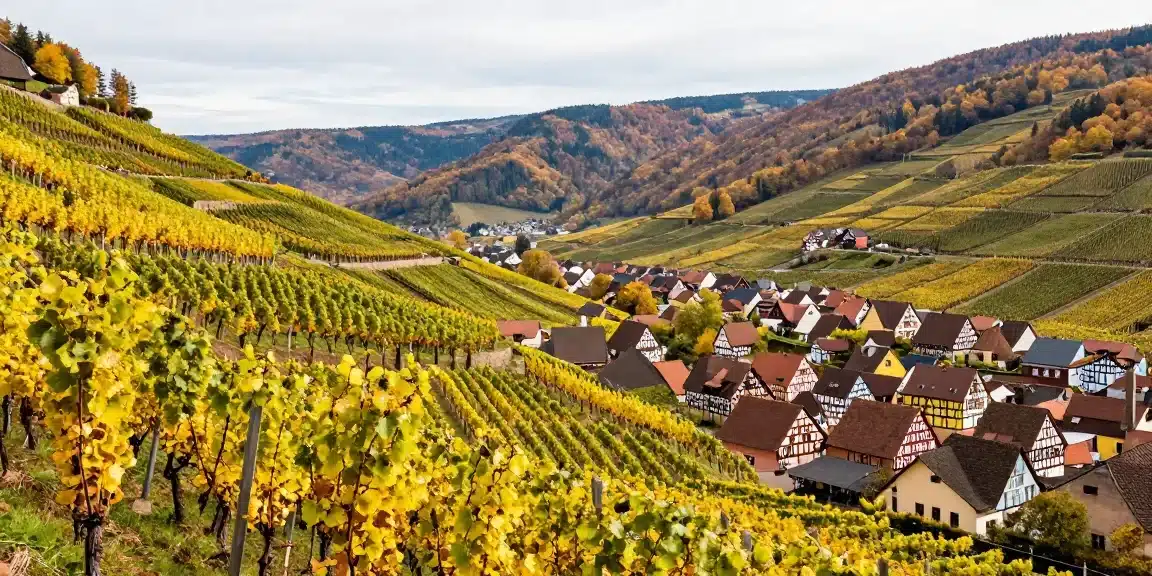
Riesling can be dry, off-dry or sweet, and its acidity keeps even sweet versions fresh. In the US you can find it close to home in the Finger Lakes and Washington State, alongside Germany and Alsace. Learn the label terms first, then compare regions.
Riesling at a glance
Useful starting points, with style and vintage taken into account.
Riesling is also established in Alsace, Austria, Australia and US wine regions.
Aromas change with ripeness, site and bottle development.
Trocken means dry. A German ripeness designation alone is not a sweetness guarantee.
Some Rieslings develop for years, while others are enjoyed for fresh fruit.
What Riesling tastes like
Lemon, lime, apple, peach and floral notes are useful references for Riesling. Its acidity often gives a mouthwatering finish in both dry and sweet versions. That balance helps explain why two wines with similar sugar levels can taste different.
The German Wine Institute describes Riesling across different styles and regions. Neither the country nor the grape name alone tells you exactly how sweet, light or full a bottle will be.
Some wines develop a gasoline-like or kerosene-like aroma, often described as “petrol” in wine writing. The compound TDN contributes to that impression. It is not a quality certificate, and a wine does not need a strong petrol note to be a good Riesling. The Australian Wine Research Institute discusses factors affecting this aroma, including storage temperature.
German label terms: ripeness is not sweetness
| Term | How to use it |
|---|---|
| Trocken | Dry. The legal definition takes account of residual sugar and, in some cases, acidity. |
| Halbtrocken | A defined medium-dry category. It still helps to ask how the wine tastes. |
| Feinherb | A descriptive term without one fixed legal sugar limit. Often used for an off-dry impression. |
| Kabinett / Spätlese / Auslese | Grape-ripeness designations. Read them with any sweetness wording and the producer’s description. |
| Beerenauslese / Trockenbeerenauslese | Concentrated sweet-wine categories. The word trocken inside Trockenbeerenauslese does not mean a dry table wine. |
The German Wine Institute’s sweetness guide is useful when label terminology becomes confusing. Do not assume every Kabinett is sweet or every German Riesling is off-dry.
Regions worth comparing
Germany offers dry and sweeter Rieslings from several regions, including Mosel, Rheingau, Rheinhessen and Pfalz. Alsace and Austria also produce important dry styles, while Australia’s Clare and Eden Valleys are familiar names for dry Riesling. These are starting points, not guarantees of one flavor per region.
In the US, Finger Lakes and Washington Riesling provide options to explore closer to home. Look for a sweetness indication or producer description. The Finger Lakes should not be reduced to an “emerging off-dry” category: ask about the actual bottle.
For a useful comparison, buy two wines with similar sweetness and different origins. Otherwise, sugar may dominate the comparison and conceal differences in aroma, texture and acidity.
Riesling in the US: Finger Lakes, Washington and Michigan
Finger Lakes, New York. The deep glacial lakes moderate the climate enough for Riesling, which has become the region's signature white. Dr. Konstantin Frank helped show in the late 1950s and 1960s that European grapes such as Riesling could survive Finger Lakes winters, and many producers now make dry, off-dry and late-harvest styles side by side. Crisp acidity and citrus and stone-fruit notes are typical, but sweetness varies from one bottling to the next.
Washington State. The Columbia Valley produces a large share of American Riesling, from inexpensive, fruity, off-dry bottles to drier wines from cooler sites. Chateau Ste. Michelle is one of the best-known producers and one of the largest Riesling producers in the country.
Michigan and elsewhere. The Old Mission and Leelanau peninsulas in northern Michigan, Oregon and cooler parts of California also make Riesling worth trying if you find it locally.
Many US Rieslings carry a sweetness scale on the back label, developed by the International Riesling Foundation, with four steps: Dry, Medium Dry, Medium Sweet and Sweet. It is the quickest way to know what you are buying, and it avoids decoding German ripeness terms.
Riesling prices in the US (as of September 2026)
Approximate shelf ranges for 750 ml (25.4 fl oz) bottles as of September 2026. These are budget bands, not a price check of specific bottles, and they vary by state, store and vintage.
| Tier | Approximate shelf price |
|---|---|
| Everyday Washington Riesling | about $8 to $15 |
| Finger Lakes and Michigan | about $15 to $30 |
| German Kabinett and Spätlese from good producers | about $18 to $40 |
| Alsace and dry German Grosses Gewächs | about $20 to $40 for Alsace, $40 and up for Grosses Gewächs |
Where to buy Riesling in the US
Total Wine & More and most large wine shops group bottles by country and region, Wine.com ships to many states and shows vintage and technical notes, Costco carries a rotating selection depending on the warehouse and state law, and Trader Joe's sells wine in many, but not all, states. Look for German Riesling under Germany, Alsace under France, and US Riesling by state; Finger Lakes wineries also ship directly to consumers where state law allows.
Food pairings for dry and off-dry styles
A dry Riesling can work with grilled fish, pork, roast chicken or vegetables with a citrus dressing. A little sweetness can be helpful with a mildly spicy dish or a sauce containing some sugar.
For takeout, check the dish’s chili level as well as the wine’s alcohol. Off-dry Riesling can be a useful option, but sweetness does not make every pairing with intense heat successful.
With fruit dessert, select a sweet wine rather than a dry bottle that merely smells fruity. Consider how sweet the dessert is. A lightly sweet Riesling may disappear beside a heavily sugared pie or sauce.
Buying, serving and cellaring
At a US wine shop, start by saying “dry,” “off-dry” or “sweet,” then explain whether you want a light or fuller style. If the back label has a sweetness scale, use it alongside the producer’s notes rather than guessing from bottle shape.
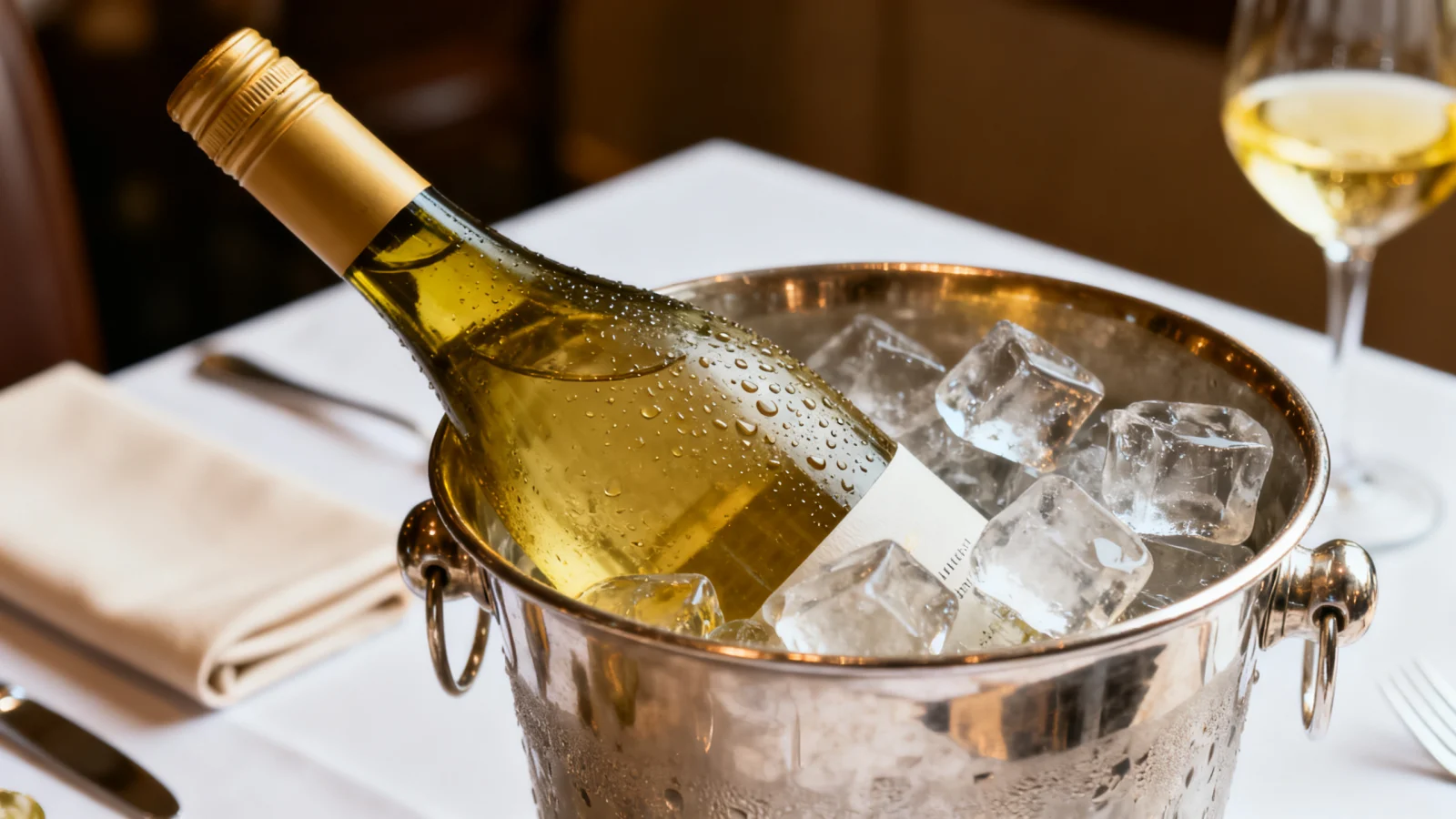
Try most still Rieslings around 46 to 52°F (8 to 11°C), allowing a more textured dry wine to warm a little. A very cold glass can hide aroma and make the acidity feel more prominent.
For aging, look for a recommendation specific to the wine and vintage. Acidity can support development, but it does not guarantee that every bottle improves for decades. Storage history matters when purchasing older Riesling.
If you enjoy dry Riesling, compare it with Grüner Veltliner. For another grape with a wide sweetness range, explore Chenin Blanc.
Frequently asked questions about Riesling
Is Riesling always sweet?
No. Dry, off-dry and sweet styles all exist. Look for dry or trocken, a sweetness scale, or the producer’s description.
Does Spätlese mean the finished wine is sweet?
Not by itself. It is a grape-ripeness designation. Read it with any sweetness wording and the producer’s description of the wine.
Is a petrol aroma a sign of quality?
No. TDN can create a petrol-like aroma, but its presence or intensity is not a quality grade. Preferences and the wine’s overall balance matter.
Can every Riesling be kept for decades?
No. Some wines develop with long cellaring, while others are intended for fresh fruit. Use guidance for the specific producer, wine and vintage.
What does the sweetness scale on some US Riesling labels mean?
It is the International Riesling Foundation scale, which places the wine on four steps: Dry, Medium Dry, Medium Sweet or Sweet. It reflects the balance of sugar and acidity, so it is more useful than the sugar figure alone.
Sources and further reading
Appellation and grape references checked September 22, 2026:
- German Wine Institute: Riesling
- German Wine Institute: sweetness categories
- Australian Wine Research Institute: TDN and petrol aroma
Continue with our grape variety guide, serving temperature guide and food pairing guide.
Food pairings to try
Choose the wine for the sauce, sweetness and intensity of the dish.
Grilled fish
Start with a dry Riesling and consider the sauce.
Roast chicken
A dry or lightly off-dry bottle can work with different sides.
Mildly spicy takeout
Check both sweetness and alcohol, especially with chili.
Fruit dessert
Choose a wine with enough sweetness for the dish.