
In short
- Wine Spectator considers 50% to 80% relative humidity safe for wine storage and puts the conventional ideal around 70%. Other sources recommend narrower targets.
- Wine Spectator says dry air is chiefly a concern in desert or arctic conditions, or when bottles will rest for 10 years or more.
- Jancis Robinson says prolonged dryness can damage a cork's seal, while a damp cellar can damage labels and resale prospects without harming properly sealed wine.
- Use an independent hygrometer, as La Sommelière advises. Jancis Robinson uses a water container for dry storage; Liebherr suggests a dehumidifier for damp storage.
What humidity should a wine cellar have? Wine Spectator's broad answer is 50% to 80% relative humidity, with around 70% as the ideal. The useful question is whether the air around your bottles stays in that range, especially if you plan to age wines sealed with natural cork.
Winter heating, air conditioning and desert climates can make an American home dry. A basement may have the opposite problem. Humidity belongs alongside temperature in a home wine storage plan, but the risks are different: dry air concerns the cork over time, while damp air shows up first on labels and surfaces.
What is the right humidity for wine storage?
Wine Spectator calls 50% to 80% relative humidity safe and about 70% ideal. Decanter favors 65% to 70%, while Jancis Robinson recommends about 75% at 55°F (13°C), with a lower humidity target at warmer temperatures. These recommendations overlap, but they are not identical.
| Who recommends what | Relative humidity guidance | How to read it |
|---|---|---|
| Wine Spectator | Wine Spectator calls 50% to 80% safe and around 70% ideal. | Its range leaves room for ordinary variation. |
| Decanter | Decanter gives 65% to 70% as best for storing fine wine. | A narrower target for a dedicated cellar. |
| Jancis Robinson | Jancis Robinson favors about 75% at 55°F (13°C), and less at higher temperatures. | Her target depends on temperature. |
| Comité Champagne | Comité Champagne recommends a steady 60% to 80%. | Stability is part of its advice. |
| Wine Australia | Wine Australia's aging guide specifies approximately 70%. | A target for long-term cellaring. |
The Australian Wine Research Institute (AWRI) advises limiting humidity swings and notes that most storage facilities do not adjust humidity. That helps put a household reading in perspective: a steady space within Wine Spectator's safe range does not call for constant adjustment to hit another source's exact ideal.
Wine Spectator says corks drying from the outside is mainly a practical concern in desert or arctic conditions, or for storage lasting 10 years or more. Check the conditions around the bottles before treating a brief reading as damage already done.
What dry and damp air do to corks, labels and wine
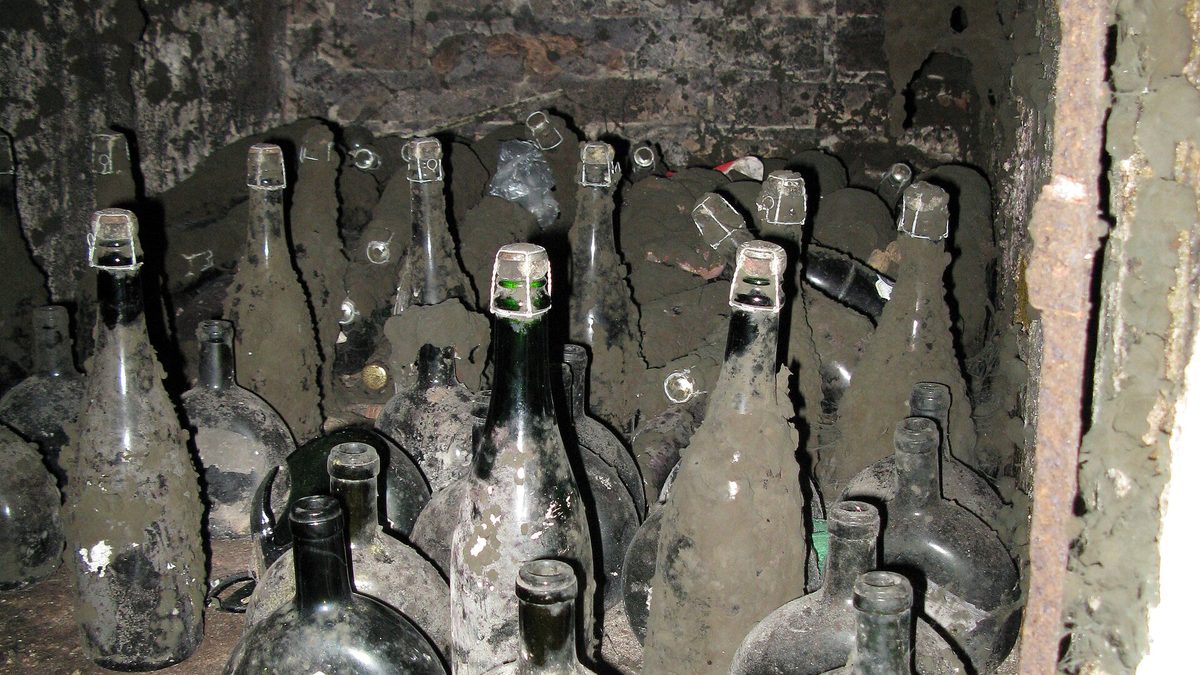
For bottles sealed with natural cork, prolonged dryness is the concern for the wine; excessive dampness is more immediately visible on labels. Jancis Robinson says a cellar can be so damp that its bottles become difficult to sell even though the wine itself is unaffected.
| Condition | What the sources say | What to inspect |
|---|---|---|
| Dry air over years | Jancis Robinson says a cork can dry and lose its seal. AWRI also identifies dry natural cork as a risk; Liebherr warns of shrinkage below 50%. | Vintec says corks that break or crumble on opening can signal low humidity. |
| Damp air | Jancis Robinson says damp storage can spoil labels and resale prospects without affecting the wine. | Watch for damaged or hard-to-read labels. |
| Mold | Wine Spectator says extreme dampness can promote mold, but mold does not affect a properly sealed wine. Liebherr warns of mold on corks above 80%. | The CIVB also points to mold on cork tops and damaged labels in overly humid storage. |
Humidity cannot compensate for poor temperature control. If a basement or closet changes temperature sharply, check the wine storage temperature guide as well as the hygrometer. AWRI recommends limiting changes in both temperature and humidity.
How to measure wine cellar humidity
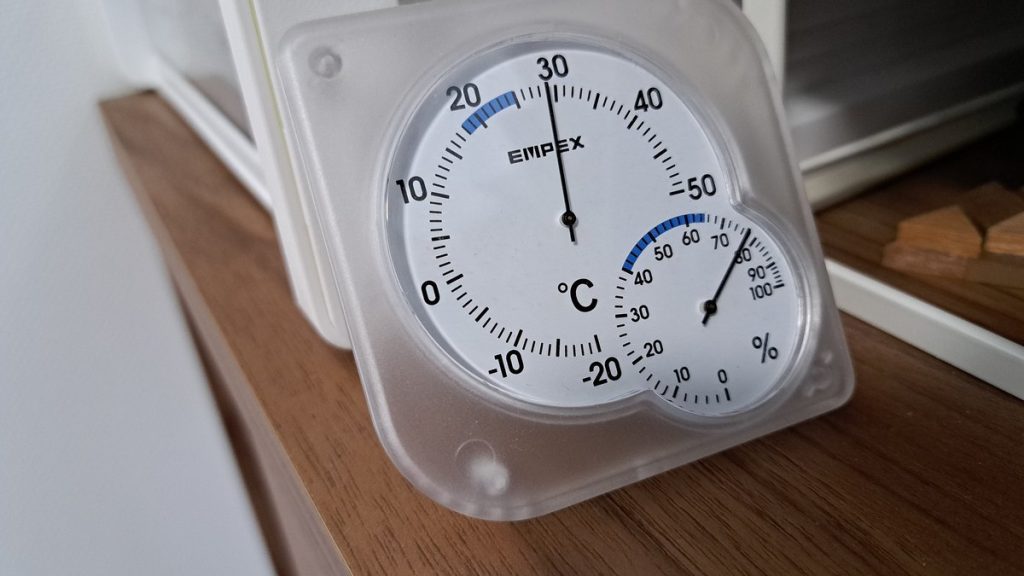
Choose an independent hygrometer and place it where the bottles sit. La Sommelière advises using an independent thermometer and hygrometer instead of relying only on a cabinet's built-in display; Jancis Robinson checks her storage with a humidity meter. An analog thermo-hygrometer can show both conditions on the same shelf.
- Measure at bottle height. Put the hygrometer among the stored bottles, away from a water tray or the cabinet door, so it samples the air the bottles occupy.
- Watch the seasons. Record readings through winter heating and summer air conditioning before judging a basement or closet from one glance. Note what happens when the room's conditions change.
- Check after a correction. If you add water or run a dehumidifier, return to the same measuring spot. AWRI advises limiting humidity variation, so the pattern matters as much as an isolated reading.
- Measure temperature too. Jancis Robinson recommends a minimum and maximum thermometer when evaluating a storage location. Keep both readings with your cellar inventory so you know which bottles experienced the conditions.
A hygrometer beside a water container or against a cabinet wall may describe that spot better than the shelves holding your wine. Use the same position each time so a change in the reading reflects a change in storage conditions.
How to correct a dry or damp wine cellar
For a dry room, Jancis Robinson uses a large container of water and checks the result with a hygrometer; Liebherr also suggests water trays. For a damp room, Liebherr suggests a dehumidifier. Change the room conditions, then measure again at bottle height.
If the air is dry
Start with the water container described by Jancis Robinson. Liebherr suggests a water tray in the storage area, while La Sommelière includes a cellar humidifier among its options. Check the hygrometer as the room responds; the aim is a steady reading within the range you have chosen.
If the air is damp
Liebherr suggests a dehumidifier for an overly humid storage area. Keep checking labels and cork tops while measuring the air. Jancis Robinson's warning about damaged labels matters especially when bottles may later be sold or passed on.
Remove any water container you added before trying to lower humidity. A basement and a living area can respond differently as heating or air conditioning changes, so keep the hygrometer in place after the first improvement.
Wine Spectator accepts 50% to 80%, while Decanter prefers 65% to 70%. If the meter stays within the broader range and the bottles show no damage, the sources give you room to observe seasonal changes before intervening again.
What about wine fridges and multi-temperature cabinets?
For long aging, look at the humidity behavior of the cabinet you own, not just its temperature setting. EuroCave recommends 60% to 80% in its aging-cabinet guidance; Vintec says humidity in its single-temperature cabinets should remain above 50% to protect corks. These are each manufacturer's instructions for its own equipment.
| Cabinet guidance | Manufacturer's advice | Practical implication |
|---|---|---|
| EuroCave aging cabinet | EuroCave's FAQ recommends 60% to 80% and describes humidity management through condensation and cabinet walls. | Check the cabinet's humidity reading against an independent hygrometer. |
| Liebherr wine cabinet | Liebherr describes humidity controls adjustable from 50% to 80% and an alert below 50% on equipped cabinets. | Use the controls and alerts your cabinet provides. |
| Vintec multi-temperature cabinet | Vintec says its multi-temperature cabinets cannot maintain enough humidity for natural corks over long periods and advises rotating those bottles within 6 months. | Vintec allows longer storage in a middle zone for screw-capped bottles. |
Vintec says its single-temperature cabinets recover condensation in a tray and let it evaporate again. Its loading advice is to leave a finger's distance between bottles and the back wall. A kitchen refrigerator serves a different purpose: Wine Spectator allows it for a couple of months, but describes it as too cold and dry for long storage.
Vintec's caution applies to its multi-temperature cabinets and natural corks. Check the guidance for your own unit and measure the air at the shelf you use before assigning it bottles intended for long aging.
When does humidity change your aging plan?
Give dry storage closer attention when cork-finished bottles will remain there for 10 years or more, as Wine Spectator advises, or when you live in a desert or arctic climate. Jancis Robinson describes cork damage as a risk that develops over several years. For bottles you intend to keep, pair the hygrometer record with the wine aging guide so their planned drinking dates reflect where they actually rest.
Related guides
- How to Store Wine at Home
- Wine Storage Temperature
- Wine Cellar Management
- How Long to Age Wine
- How Long Does Wine Last?
Sources
- Wine Spectator: How to Store Wine
- Jancis Robinson: How and Where to Store Wine
- Decanter: Best Humidity for Storing Wine
- Australian Wine Research Institute: Transport and Storage
- Liebherr: Storing Wine
- Vintec: Wine Cabinet FAQs
Images: moldy bottles by Poom!, CC BY-SA 2.0; thermo-hygrometer by RuinDig/Yuki Uchida, CC BY 4.0; both from Wikimedia Commons (cropped).
Wine cellar humidity FAQ
What is the ideal humidity for wine storage?
Wine Spectator considers 50% to 80% relative humidity safe and around 70% ideal. Decanter recommends 65% to 70%, while Jancis Robinson favors about 75% at 55°F (13°C). Use an independent hygrometer to learn where your bottles sit within those ranges, then watch whether the reading stays steady.
Is a dry basement bad for wine?
It can be for natural corks over a long stay. Jancis Robinson says prolonged dry air can make a cork lose its seal. Wine Spectator puts the practical concern mainly in desert or arctic conditions, or storage lasting 10 years or more. Measure through the heating season before deciding how to correct the room.
Can mold on a wine cork spoil the wine?
Wine Spectator says mold from very damp storage does not affect wine that is properly sealed, although it can damage labels. The CIVB notes that excessive humidity encourages mold on cork tops. Inspect the seal and label condition, then measure the room's humidity rather than judging the wine by surface mold alone.
Where should I put a wine cellar hygrometer?
Put it at bottle height among the wines, away from a water container, door or cabinet wall. That position samples the air surrounding the bottles. La Sommelière advises an independent hygrometer even when a cabinet has a display. Keep it in the same place while you compare heating and cooling seasons.
How do I lower humidity in a wine cellar?
Use a dehumidifier, as Liebherr suggests for an overly damp storage area. Remove a water tray if you added one, then check an independent hygrometer at bottle height as the room responds. Jancis Robinson warns that sustained dampness can damage labels and make bottles difficult to resell even when the wine is sound.
Can I age wine in a multi-temperature cabinet?
Check the advice for your cabinet and its humidity at the bottle shelf. Vintec says its multi-temperature cabinets cannot keep natural corks sufficiently humid over long periods and advises rotating those bottles within 6 months. Vintec makes an exception for screw-capped bottles stored in a middle zone. Its advice concerns its own cabinets.