
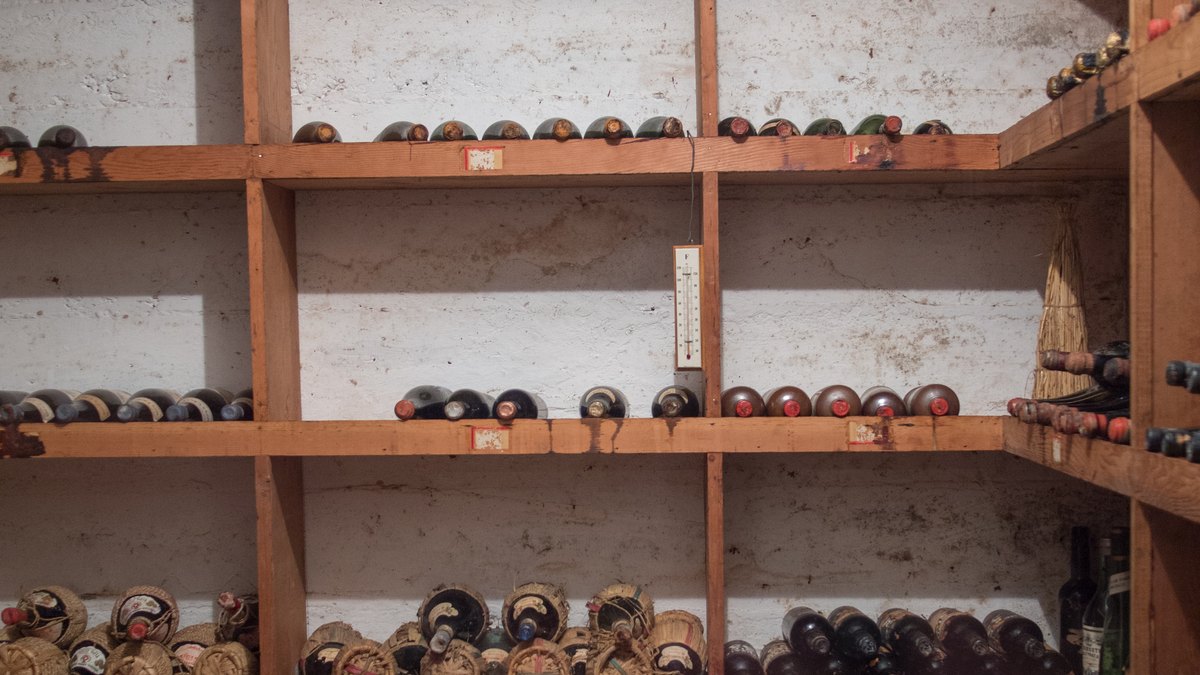
In short
- Set a wine fridge or cellar to 55°F (13°C) for storage, whatever the color: red, white and sparkling wines all keep best in the same 50 to 59°F range.
- Different temperatures for red and white are serving temperatures. That is what the second zone of a dual-zone fridge is for.
- Steadiness beats precision. A closet that sits at 62°F all year is kinder to wine than a garage that swings from 40°F to 85°F.
- Above about 75°F for weeks, wine ages fast and loses fruit. Around 86°F, damage comes quickly. Below 23°F, it can freeze and push the cork.
What temperature should a wine fridge be? For bottles you are keeping, 55°F. That one number works for Napa Cabernet, Oregon Pinot Noir, Finger Lakes Riesling and Champagne alike, because storage temperature has nothing to do with the color of the wine.
The confusion comes from serving advice. We drink reds warmer than whites, so many people assume reds should also be stored warmer. They should not. This guide gives the storage number, the settings for single-zone and dual-zone units, and what happens to a bottle when the temperature drifts.
The ideal wine storage temperature is 55°F, for every wine
The reference points agree closely. The Wine & Spirit Education Trust (WSET) recommends 50 to 59°F (10 to 15°C) for long-term storage. Wine Spectator gives a safe range of 45 to 65°F and notes that 55°F "is often cited as close to perfect". Jancis Robinson puts the ideal between 50 and 59°F and adds that a steady temperature matters more than a cold one.
| Storage temperature | What it does to the wine | Verdict |
|---|---|---|
| Below 23°F (-5°C) | Wines at 14% alcohol or less start to freeze. The liquid expands, the cork is pushed out, the bottle can crack. | Never: an unheated garage or porch in a northern winter |
| Below 50°F (10°C) | Aging slows right down and the wine may stay closed. | Harmless, but expect longer waits |
| 50 to 59°F (10 to 15°C) | Slow, even development, the pace that published drinking windows assume. | The target zone, with 55°F in the middle |
| 59 to 65°F (15 to 18°C) | The wine matures faster. If the temperature is steady, it is not harmed. | Fine: just open bottles earlier than planned |
| 65 to 75°F (18 to 24°C) | Fruit fades noticeably sooner. Wine Spectator notes that above 70°F a wine ages more quickly than is usually desirable. | A few weeks, not a few years |
| 77°F (25°C) and above | Quality suffers over long periods. Purdue University's enology extension advises that wine should never see 86°F (30°C), even briefly. | Damage: "cooked" flavors, seeping corks |
Heat matters because chemistry speeds up with temperature. As an order of magnitude, reactions run two to four times faster for every 18°F (10°C) of extra warmth. A UC Davis study of California Chardonnay made the point in practice: every wine in the trial aged better at 50°F than at 68°F or 104°F.
No. Between 59 and 68°F a wine comes to no great harm as long as the temperature does not swing sharply, as Jancis Robinson points out. It simply ages faster, so bring your drinking dates forward instead of worrying.
Red wine vs white wine: storage and serving are two different settings
This table clears up the mix-up. The middle column never changes. The right-hand column follows our wine serving temperature chart.
| Wine | To store it | To serve it |
|---|---|---|
| Medium- to full-bodied red (Cabernet, Syrah, Zinfandel) | 55°F | 59 to 64°F |
| Light red (Gamay, lighter Pinot Noir) | 55°F | 55 to 59°F |
| Fuller white (oak-aged Chardonnay) | 55°F | 50 to 55°F |
| Crisp white, dry rosé | 55°F | 45 to 50°F |
| Champagne and sparkling | 55°F (50 to 59°F) | 46 to 50°F |
The practical consequence: a red pulled from a 55°F wine fridge is a little cool for a big Cabernet, and that is normal. Give it half an hour on the counter. A lighter Pinot Noir or an oak-aged Chardonnay is ready to pour straight from storage.
What to set on a single-zone or dual-zone wine fridge
The right number depends on what the unit is for. Decide first whether a zone is storing bottles for years or holding them ready for dinner.
| Your setup | Setting | Good to know |
|---|---|---|
| Single zone, long-term storage | 55°F | Reds, whites and sparkling together. Resist turning it into a serving fridge. |
| Dual zone, ready to serve | Lower zone 45 to 50°F for whites and sparkling; upper zone 59 to 64°F for reds | For bottles you will open in the coming weeks, not for a decade of aging. |
| Dual zone, storage plus serving | One zone at 55°F for the bottles you are keeping; the other at the serving temperature of what you drink most | The most useful compromise in an apartment. |
| Kitchen refrigerator | Leave it where it is, around 37 to 40°F | Fine for a couple of months and for opened bottles. Too cold and too dry for long storage. |
Temperature is only half of long-term storage. Wine-cabinet maker Vintec warns that its multi-temperature units cannot keep humidity high enough to protect natural corks over long periods, and advises rotating bottles within six months. If a zone is set for serving, treat it as a waiting room.
Swings do more harm than a slightly wrong number
When wine warms up it expands and pushes against the cork. When it cools it contracts and can draw in a little air. Repeat that every day and the wine oxidizes early, sometimes with a sticky trace of seepage under the capsule.
What is fine
A slow seasonal drift. A basement that sits at 52°F in February and 60°F in August, with no daily jumps, will age good wine well.
What hurts
Fast, repeated changes: a rack near the oven, a sunny room, a garage. Purdue's guidance for cellaring is a temperature that stays constant within 2 to 3°F.
Measure before you buy anything
- Use a min/max thermometer. It records the lowest and highest readings, which a glance at a display never shows.
- Put the probe where the bottles are, on a shelf at bottle height, not by the door.
- Log a full year if you are judging a basement or closet. The July and January extremes decide whether the space works.
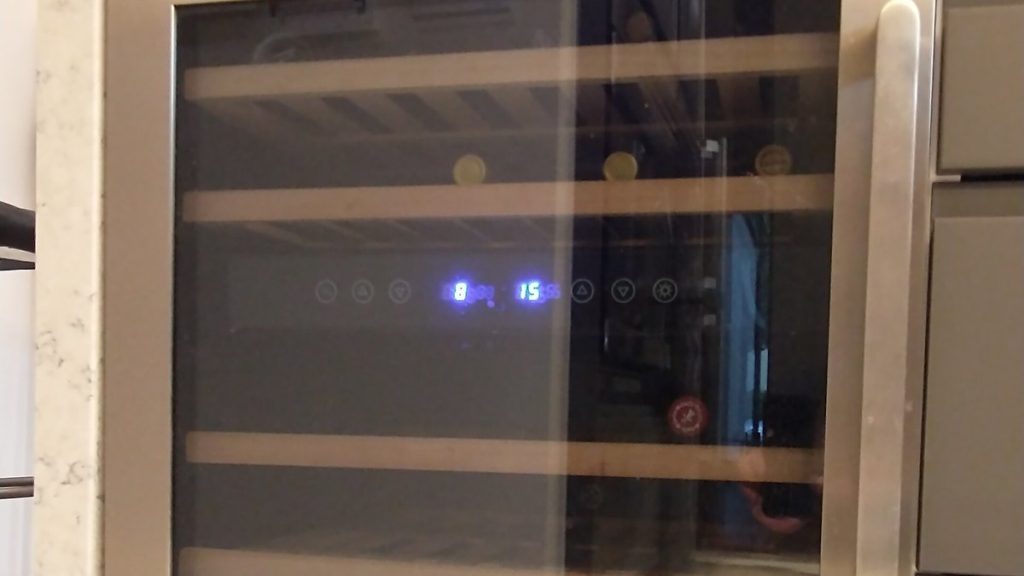
- Check the fridge against an independent thermometer. The built-in display reports a sensor, not every shelf.
Too hot in summer, too cold in winter: what to do
Basement or closet runs warm
Move the bottles away from the furnace, water heater and any sun-facing wall first. If the space still passes 65°F for much of the summer, keep the bottles meant for aging in a storage-grade wine fridge.
Wine fridge in the garage
A wine fridge is built to cool, not to heat. In a garage that drops toward freezing it cannot hold 55°F unless it has a heating function, and in a 100°F summer it may run constantly. Check the ambient operating range in the manual before you place it there.
European makers print that range as a climate class: SN units are rated for rooms from 50 to 90°F, N units from 61 to 90°F. Whatever the label on yours, the safest home for a wine fridge is a room that people live in. For bottles kept without any appliance, our guide to storing wine at home ranks the closets and corners that limit the damage.
Keep the door shut. A full wine fridge warms slowly, and a gentle drift of a few degrees over a few hours leaves no trace.
Does the storage temperature change how long a wine lasts?
Yes, and it is the main reason two bottles of the same wine can taste years apart. Drinking windows assume cool, steady storage. A Napa Cabernet given a 10 to 20 year window will not get there in a 72°F closet. If your storage runs warm, use the early end of the ranges in our drinking window chart, and keep track of what needs opening with a simple cellar inventory.
Related guides
- How to Store Wine at Home: Unopened and Opened Bottles
- Wine Serving Temperature: A Practical Guide by Style
- How Long to Age Wine: A Drinking Window Chart by Style
- How Long Does Wine Last After Opening?
Sources
- WSET: ideal serving temperatures and top tips for wine storage
- Wine Spectator: how to store wine (temperature, humidity, coolers)
- Purdue University Extension, Christian Butzke: wine storage guidelines (PDF)
- UC Davis: storage temperature study on California Chardonnay
- Jancis Robinson: how to store wine
Pages read on November 11, 2026. Manufacturer guidance (Vintec, climate classes) is quoted as the maker's own advice. Images: cellar thermometer by Edsel Little, CC BY-SA 2.0; wine fridge display by Stilfehler, CC BY-SA 4.0; both from Wikimedia Commons (cropped).
Wine storage temperature FAQ
What temperature should a wine fridge be for red wine?
55°F for storage, the same as for white wine. The 59 to 64°F often quoted for reds is a serving temperature. Stored that warm for years, a red ages faster than its drinking window assumes. Take the bottle out about half an hour before dinner to let it warm up.
What temperature should a wine fridge be for white wine?
55°F if you are storing the bottles. For serving, crisp whites and dry rosés show best at 45 to 50°F and fuller whites at 50 to 55°F, so a short stay in the kitchen refrigerator or a serving zone finishes the job.
Can I store red and white wine in the same wine fridge?
Yes. For storage every wine shares the same temperature, around 55°F, so a single-zone fridge can hold reds, whites and sparkling wines together. A second zone only becomes useful if you also want bottles held at serving temperature.
Is 60 or 65 degrees too warm to store wine?
Not if it is steady. Wine Spectator treats 45 to 65°F as a safe range. At 60 to 65°F the wine matures faster than at 55°F, so plan to open bottles earlier. Sustained temperatures above about 70°F are where storage starts to shorten a wine's life noticeably.
How should I set a dual-zone wine fridge?
For serving, set the lower zone to 45 to 50°F for whites and sparkling wines and the upper zone to 59 to 64°F for reds. If you also keep bottles for years, set one zone to 55°F for storage and the other to the serving temperature of the wines you open most often.
Can I keep a wine fridge in the garage?
Only if the unit is rated for the temperatures your garage reaches. Most wine fridges cool but do not heat, so a garage near freezing in winter drags the wine down with it, and extreme summer heat makes the compressor work nonstop. Check the ambient operating range in the manual first.