
In short
- For long-term ageing, Wine Australia recommends a steady 13 to 16°C and relative humidity around 70%.
- Store reds and whites at the same temperature. Their serving temperatures differ.
- AWRI says prolonged exposure above 25°C or short exposure above 40°C can affect wine quality. It also warns against marked day and night temperature cycling.
- Measure a garage, shed or cupboard through summer before trusting it with bottles you intend to age.
For wine you plan to keep, start with Wine Australia's steady 13 to 16°C. The challenge in an Australian home is finding a place that stays cool through summer, including after the air conditioning is off. Our guide to storing wine at home covers the wider choices; here, temperature is the deciding test.
A wine fridge can make that test easier, but its setting depends on whether you are ageing bottles or keeping them ready to pour. A room also needs more than a comfortable reading at breakfast: AWRI advises checking for substantial changes between day and night.
What temperature should wine be stored at in Australia?
Wine Australia recommends a consistent 13 to 16°C for long-term ageing. Other authorities give different ranges, so treat that Australian guidance as a starting point and check whether your storage remains steady.
| Who says what | Temperature guidance |
|---|---|
| Wine Australia | Wine Australia recommends a consistent 13 to 16°C for long-term ageing. |
| WSET | WSET recommends 10 to 15°C for long-term storage. |
| Jancis Robinson | Jancis Robinson puts the ideal at 10 to 15°C and says 15 to 20°C causes no great harm if it does not fluctuate sharply. |
| AWRI | AWRI cites an earlier recommendation by Amon and Simpson for a cool place at 15 to 20°C. |
| Vintec | Cabinet maker Vintec recommends 12 to 14°C for cellaring in a single-temperature unit. |
Heat gives the upper end of the decision more urgency. AWRI says temperatures above 25°C for long periods and above 40°C for short periods can affect quality. Its technical guidance reports defects after 12 months at 30°C and visible or sensory changes within days above 40°C. Those findings make a summer peak as important as the room's average temperature.
Jancis Robinson says wine comes to no great harm at 15 to 20°C if the temperature does not change sharply. That is a more forgiving view than Wine Australia's 13 to 16°C ageing target. Use the cooler range when you can control it, particularly for bottles you hope to keep for years.
Do red and white wines need different storage temperatures?
No. Wine Australia's 13 to 16°C ageing guidance applies to wine you are keeping, whether red or white. The separate numbers people remember are for serving: WSET suggests 15 to 18°C for red wine at the table, while cabinet maker Vintec suggests 6 to 8°C for most whites.
| Bottle | For ageing | For serving |
|---|---|---|
| Red wine, including Shiraz | Wine Australia: 13 to 16°C. | WSET: 15 to 18°C. |
| White wine, including Riesling | Wine Australia: 13 to 16°C. | Vintec advises 6 to 8°C for most whites. |
| Champagne | Comité Champagne: 10 to 15°C. | Comité Champagne: about 8 to 10°C. |
For a collection mixing Australian Shiraz and Riesling, organise bottles by when you expect to open them, rather than assigning warmer storage to reds. Chill or warm each bottle before pouring; the Australian wine serving temperature guide covers that last step.
Screw caps and bottle position: who says what?
| Source | Position advice or evidence |
|---|---|
| Wine Australia | Wine Australia advises laying cork-sealed bottles on their sides; screw-cap bottles can stand upright. |
| AWRI | AWRI reports one study found little effect from upright or horizontal storage, while another found more oxidation upright with agglomerated corks. |
What should you set on a wine fridge?
For a single-zone fridge used for ageing, set 13°C: it sits within Wine Australia's 13 to 16°C range and Vintec's 12 to 14°C manufacturer recommendation. With dual zones, decide which compartment is for ageing and which holds bottles ready to serve.
| Use | Setting | Reason |
|---|---|---|
| Single zone for ageing | Set 13°C, within Wine Australia's and Vintec's published ranges. | Store reds and whites together. |
| Dual zone, storage plus serving | Keep the ageing compartment at 13°C, within Wine Australia's range. For the other, Vintec advises 6 to 8°C for most whites or 16 to 18°C for reds being served. | The warmer or colder serving compartment is for bottles you plan to open. |
| Dual zone for serving | Vintec advises 6 to 8°C for most whites and 16 to 18°C for reds. | Check the cabinet's intended use before treating either zone as long-term storage. |
Vintec warns that its multi-temperature cabinets do not maintain enough humidity for natural corks over long periods. The manufacturer advises rotating those bottles within six months and says long-term storage in a middle zone is possible for screw-cap bottles. Follow the guidance for the type of cabinet you own.
How much do day and night temperature swings matter?
Avoid marked day and night swings, says AWRI. Wine Spectator explains that rapid, repeated changes can expand and contract the wine, disturbing the seal and causing seepage. Jancis Robinson places more weight on reasonable steadiness than on hitting one exact cool temperature.
More promising
A space whose readings stay reasonably steady, even if it is a little warmer than Wine Australia's target. Jancis Robinson says steady storage at 15 to 20°C causes no great harm.
Riskier
A space that heats each afternoon and cools overnight. AWRI specifically advises avoiding substantial thermal cycling between day and night.
Measure before trusting a room
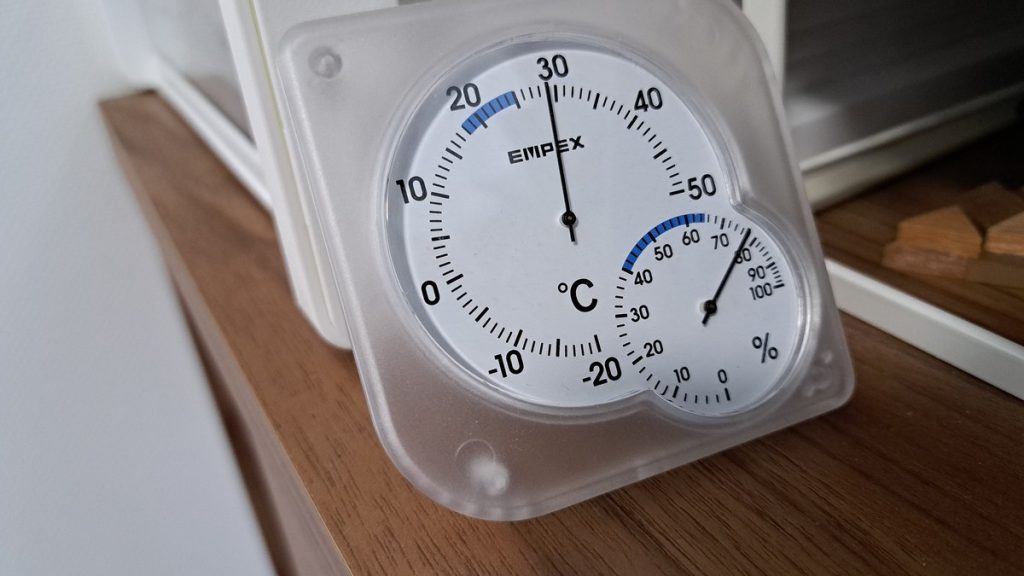
- Record the extremes. Jancis Robinson recommends a minimum and maximum thermometer when assessing a possible storage place.
- Watch the cycle. AWRI suggests a small temperature logger that records readings at regular intervals. Check hot afternoons as well as cooler nights.
- Check humidity too. Wine Australia recommends about 70% relative humidity for long-term ageing. Cabinet maker La Sommelière advises using an independent thermometer and hygrometer.
- Measure where bottles sit. Compare your recorded highs with AWRI's warning about prolonged exposure above 25°C, then repeat the check as conditions change.
Can a garage, shed or cupboard survive an Australian summer?
A garage or shed is a poor choice for ageing until measurements show it avoids AWRI's prolonged exposure above 25°C and marked day and night cycling. An under-house space, interior cupboard or air-conditioned room earns trust the same way: by its recorded conditions, measured against Wine Australia's 13 to 16°C target.
Garage
Check summer highs and overnight falls before storing wine here. AWRI's heat and cycling warnings apply; Jancis Robinson also cautions against garages with petrol or oil smells.
Shed
Do not judge it by a cool morning visit. Log its hottest periods and daily changes, then compare them with AWRI's heat guidance before leaving ageing bottles inside.
Under the house
Potentially useful if measurements show stable conditions near Wine Australia's 13 to 16°C target. Check humidity against Wine Australia's approximate 70% guidance and keep bottles away from strong odours.
Interior cupboard
A candidate when it stays dark and steady. Jancis Robinson says 15 to 20°C causes no great harm without sharp changes, though Wine Australia's ageing target is cooler.
Air-conditioned room
Use it if the actual bottle area stays controlled, including when cooling is off. La Sommelière's advice to use an independent thermometer helps check the room beyond its thermostat display.
Will a wine fridge work in a hot garage?
Only if the room stays within the cabinet's rated ambient range. La Sommelière and Climadiff publish different lower limits for the ST and T climate classes, so check the rating and manual of the particular unit.
| Climate class | La Sommelière's ambient range | Climadiff's ambient range |
|---|---|---|
| SN | La Sommelière: 10 to 32°C. | Climadiff: 10 to 32°C. |
| N | La Sommelière: 16 to 32°C. | Climadiff: 16 to 32°C. |
| ST | La Sommelière: 18 to 38°C. | Climadiff: 16 to 38°C. |
| T | La Sommelière: 18 to 43°C. | Climadiff: 16 to 43°C. |
A climate class is a manufacturer's ambient operating range. Compare it with the garage's recorded extremes and check the manual for your cabinet. A suitable class does not remove AWRI's warning about heat reaching the bottles during storage.
Does warmer storage shorten a wine's ageing window?
Yes. Purdue University Extension says maturation accelerates above 16°C; AWRI reports defects after 12 months at 30°C and sensory changes within days above 40°C. If a bottle has spent prolonged periods in a warm place, bring it forward in your opening plans. A simple record of where bottles have been kept belongs alongside the drinking dates in a cellar inventory.
Related guides
- Storing wine at home
- Wine serving temperature in Australia
- Wine cellar management
- Australian Shiraz
- Riesling
Sources
- Wine Australia: aged Australian wine educator guide
- AWRI: transport and storage of bottled wine
- WSET: serving temperatures and wine storage
- Vintec: wine cabinet guidance
- La Sommelière: temperature, humidity and climate classes
- Climadiff: cabinet placement and climate classes
Images: cellar room by Edsel Little, CC BY-SA 2.0; thermo-hygrometer by RuinDig/Yuki Uchida, CC BY 4.0; both from Wikimedia Commons (cropped).
Wine storage temperature FAQ
What is the best wine storage temperature in Australia?
Wine Australia recommends a steady 13 to 16°C for long-term ageing. WSET recommends 10 to 15°C, and cabinet maker Vintec recommends 12 to 14°C for single-temperature cellaring. The overlap gives you room to choose a setting your space can maintain. AWRI advises avoiding substantial changes between day and night.
What temperature should I set a single-zone wine fridge to?
Set it to 13°C for ageing. That sits inside Wine Australia's 13 to 16°C guidance and Vintec's 12 to 14°C manufacturer recommendation. Keep reds and whites together, then bring each bottle to its serving temperature before drinking. Check the temperature where the bottles sit with an independent thermometer, as La Sommelière advises.
Should red and white wine use different storage zones?
No. Wine Australia's 13 to 16°C long-term ageing range works as the shared storage target. A separate zone is useful for bottles being prepared for serving: WSET suggests 15 to 18°C for red wine at the table, while Vintec's manufacturer guidance suggests 6 to 8°C for most whites. Those serving settings serve a different purpose.
Can I store wine in an Australian garage or shed?
Only after measuring its summer temperatures and daily changes. AWRI says prolonged exposure above 25°C and short exposure above 40°C can affect quality, and advises against marked day and night cycling. A garage also needs checking for petrol or oil smells, as Jancis Robinson cautions. A cool morning reading cannot establish its suitability.
Is an interior cupboard or under-house space good enough?
Yes, if measurements show it remains steady and reasonably cool. Wine Australia's target for long-term ageing is 13 to 16°C. Jancis Robinson says a steady 15 to 20°C causes no great harm, provided the temperature does not change sharply. Use a minimum and maximum thermometer, which Jancis Robinson recommends for assessing potential storage spaces.
Can screw-cap wine stand upright in storage?
Yes. Wine Australia says screw-cap bottles can stand upright and advises laying cork-sealed bottles on their sides. It also recommends relative humidity around 70% for long-term ageing. AWRI's review found that bottle orientation had little effect in one study, while another found more oxidation when agglomerated-cork bottles stood upright. The closure matters when choosing a position.