
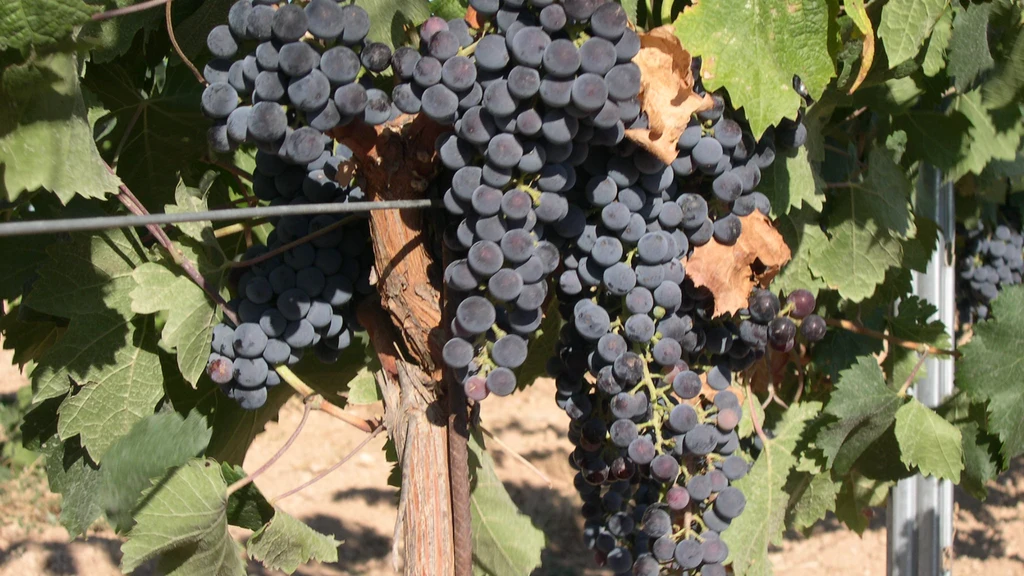

Merlot makes round, plum-scented red wines with softer tannins than Cabernet Sauvignon. It leads the blend on Bordeaux's Right Bank, and in the US the best-known sources are Washington State, Napa and Sonoma, and Long Island.
Merlot at a glance
Useful starting points, with style and vintage taken into account.
Most planted grape in Bordeaux, key on the Right Bank.
Cooler sites add herbal notes; oak adds vanilla and spice.
Softer tannins than Cabernet Sauvignon.
Often better value than Cabernet from the same region.
What Merlot wine tastes like
Merlot usually smells and tastes of plum, black cherry and blackberry, sometimes with notes that tasters describe as chocolate, cocoa, bay leaf or tobacco. These are tasting references, not ingredients. The texture is the grape's calling card: compared with Cabernet Sauvignon, Merlot tends to feel rounder, with softer tannins and a fleshier middle.
Climate changes the picture. From a warm site or a ripe vintage, Merlot can be plush and jammy, with higher alcohol. From a cooler site, or when picked earlier, it keeps more freshness, red fruit and a leafy, herbal edge. Oak aging adds vanilla, toast or spice, and a long stay in new barrels can dominate a lighter wine. The label rarely tells you all of this, which is why the producer's notes are worth a look.
A quick look at the family tree explains some of the resemblance with Cabernet: DNA research has identified Cabernet Franc as one of Merlot's parents, so Merlot and Cabernet Sauvignon are close relatives.
Is Merlot dry or sweet?
Almost all Merlot sold in the US is a dry red wine. The ripe fruit can give an impression of sweetness on the nose and a soft, round feel in the mouth, but that is not the same as residual sugar. If sweetness matters to you, look for the technical sheet on the winery website; many list residual sugar in grams per liter. A handful of inexpensive "sweet red" blends may contain some Merlot, but they say so on the label.
Where Merlot grows: US regions and Bordeaux
| Region | What to look for |
|---|---|
| Washington State | Merlot is one of the state's signature reds, grown mostly in the dry, sunny Columbia Valley and its sub-regions such as Red Mountain, Walla Walla Valley and Horse Heaven Hills. Many bottles combine ripe fruit with firm acidity. |
| Napa Valley and Sonoma, California | Often generous and polished, and sometimes blended with Cabernet Sauvignon or Cabernet Franc. Napa Merlot is usually priced well below Napa Cabernet from the same producer. |
| Other California regions | Lodi, Paso Robles and bottles labeled simply "California" supply much of the everyday Merlot on US shelves, usually fruit-forward and ready to drink. |
| Long Island, New York | The North Fork has built a reputation for medium-bodied Merlot, fresher and less alcoholic than many West Coast examples. |
| Bordeaux, France | Merlot is the most planted grape in Bordeaux. On the Right Bank, in Saint-Émilion and Pomerol, it usually leads the blend; on the Left Bank it plays a supporting role to Cabernet Sauvignon. Labels name the place, not the grape. |
| Elsewhere | Tuscany (including some well-known "Super Tuscans"), Chile, Italy's northeast and southern France all make Merlot worth comparing. |
Merlot vs Cabernet Sauvignon
The two grapes share a parent and often share a bottle, but they do not behave the same way. Merlot ripens earlier, gives rounder wines with softer tannins and usually feels more approachable when young. Cabernet Sauvignon has thicker skins, more grip and often a more structured, age-worthy profile. In a Bordeaux-style blend, Cabernet brings the frame and Merlot fills in the middle.
If you find young Cabernet too tannic, Merlot is a logical next bottle. If you like Merlot and want more structure, try a Cabernet Sauvignon from the same region and price range. Our Cabernet Sauvignon guide covers Napa and Bordeaux in detail, and the Pinot Noir guide is the lighter alternative.
Why Merlot's reputation dipped, and why it is worth another look
In the 2004 film Sideways, the main character loudly refuses to drink Merlot. The line became a pop-culture joke, and US Merlot sales growth slowed in the following years; economists at Sonoma State University later published an analysis linking the two. The film did not change what is in the bottle, though. Washington State, Long Island and the Right Bank of Bordeaux kept making serious Merlot, and bottles from those places are often better value than Cabernet Sauvignon of a similar standard.
From a French point of view, the joke always sounded strange: some of the most sought-after wines of Pomerol are made mostly from Merlot. The grape is not the issue. Overcropped, overoaked or overripe versions are.
Merlot prices in the US (as of September 2026)
The ranges below are approximate shelf prices for 750 ml (25.4 fl oz) bottles as of September 2026. They are broad bands to help you set a budget, not a price check of specific bottles, and they vary by state, store and vintage.
| Tier | Approximate shelf price | What you usually get |
|---|---|---|
| Everyday California or Washington | about $10 to $20 | Soft, fruit-forward wines made for current drinking, often labeled "California" or "Columbia Valley". |
| Named region (Napa, Sonoma, Walla Walla, Red Mountain) | about $25 to $60 | More concentration and oak, and wines that can improve for a few years. |
| Bordeaux Right Bank | about $25 for Bordeaux Supérieur and satellites, $50 and up for Saint-Émilion Grand Cru and Pomerol | Merlot-led blends; the appellation and the château matter more than the grape name. |
Where to buy Merlot in the US
Total Wine & More usually stocks Merlot by region, which makes a Washington versus California comparison easy. Wine.com ships to many states and shows vintage and technical notes. Costco often carries Washington and California Merlot at competitive prices, depending on the warehouse and state law. Trader Joe's sells wine in many, but not all, states. For Bordeaux, look in the France section: the label will say Saint-Émilion, Pomerol or Bordeaux Supérieur rather than Merlot.
Washington and Long Island wineries also sell directly to consumers in the states they can ship to. Shipping rules differ by state, so check before ordering.
Food pairings for Merlot
Merlot's soft tannins make it an easy partner for roast pork, roast chicken, meatloaf, burgers and pasta with a meat sauce. Mushrooms, lentils and roasted root vegetables also work well with its plum and earthy notes. A fuller Napa or Washington Merlot can handle grilled steak; a lighter, fresher bottle suits turkey and cranberry sauce at Thanksgiving.
Be careful with very spicy food, which makes a high-alcohol red feel hot, and with delicate fish. Our food pairing guide explains why the sauce often matters more than the meat.
Serving and storing Merlot
Serve Merlot around 60 to 65°F (16 to 18°C). That is cooler than most living rooms, so 15 minutes in the refrigerator before opening is often enough; the serving temperature guide explains how. A standard US pour is 5 oz, about five glasses per bottle.
Most everyday Merlot does not need decanting. A young, concentrated bottle can benefit from an hour of air, and an older Bordeaux may need careful pouring to leave sediment behind; see how to decant wine. Once opened, recork the bottle and keep it in the refrigerator; our guide on how long wine lasts after opening gives the details by style.
Sources and further reading
Grape and region references checked September 26, 2026:
- Washington State Wine Commission
- Bordeaux Wine Council: official guide to Bordeaux wines
- Napa Valley Vintners
- Long Island Wine Council
- NIAAA: what is a standard drink
Continue with our grape variety guide, red wine guide and serving temperature guide.
Frequently asked questions about Merlot
Is Merlot a dry wine?
Yes, nearly all Merlot is dry. Its ripe plum and cherry fruit and soft texture can feel sweet, but that is not residual sugar. Check the winery's technical sheet if you want the exact figure.
What is the difference between Merlot and Cabernet Sauvignon?
Merlot is usually rounder and softer, with plum and black cherry fruit, while Cabernet Sauvignon has firmer tannins and more structure. The two are related through Cabernet Franc and are often blended, especially in Bordeaux.
Should Merlot be chilled?
Lightly. Aim for 60 to 65°F (16 to 18°C). If the bottle has been sitting in a warm room, about 15 minutes in the refrigerator brings it into that range.
Is Merlot a good wine for beginners?
It is a good starting point for red wine because the tannins are usually gentle and the fruit is easy to recognize. Start with a Washington or California bottle, then compare a Right Bank Bordeaux.
How long does Merlot last after opening?
Recorked and kept in the refrigerator, most Merlot stays enjoyable for about three to five days. Let it warm up a little before serving, and taste it first: flat fruit or a vinegar smell means it is past its best.
Food pairings to try
Choose the wine for the sauce, sweetness and intensity of the dish.
Roast pork
Soft tannins suit tender, savory meat.
Burgers
A fruit-forward style works with a grilled patty.
Mushroom dishes
Earthy notes echo an older or cooler-climate bottle.
Thanksgiving turkey
Choose a fresher, lighter Merlot with cranberry sauce.