
In short
- Starting a wine collection comes down to five questions, in this order: why you want one, where the bottles will live, how many you need, which wines to buy and how to split them.
- One rule holds the rest together, from French sommelier Cyril Brun: every bottle needs a reason to be in your cellar.
- A sensible first step is about 40 bottles, bought two or three per wine, mostly ready to drink, with a third or less set aside to age.
- I tested the method in October 2026 with a budget of 1,000 euros: 42 red wines from three French merchants, tracked for a month in a cellar app.
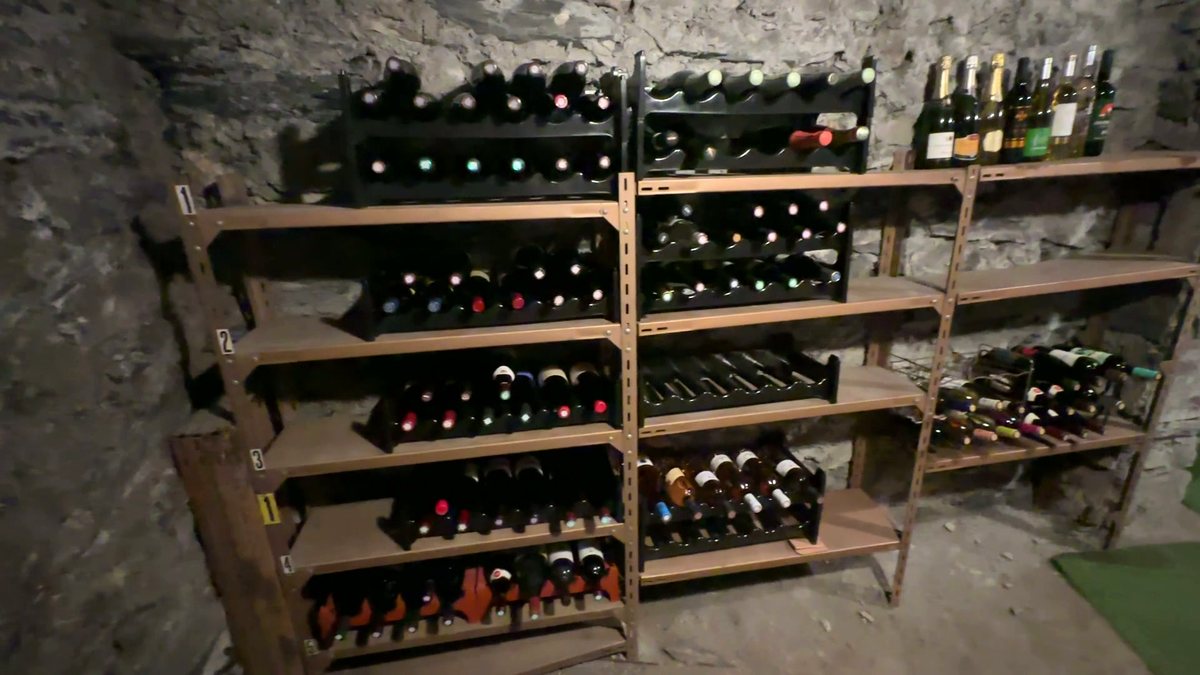
For years I had bottles in my basement without having a wine cellar. Thirty-odd wines that had piled up, a few gifts, two or three bottles worth keeping, and almost nothing to open on a Tuesday night. In October 2026 I decided to do it properly: watch and read what the people who know say on the subject, turn it into a method, then spend about 1,000 euros (roughly the same in dollars) on the first real layer of a collection.
This guide is the result. The advice comes from ten videos and seven articles, each credited at the bottom of the page; most are in French, because I run Vinabox in France. The numbers come from my own receipts. Where a US reader needs something different, such as temperatures in Fahrenheit or how buying wine works here, I say so.
The video behind this guide was made in partnership with Oeni, a cellar app. Oeni did not review or approve this page. The merchants mentioned are not partners and no link to them is paid.
Why start a wine collection at all
Before buying anything, know what you expect from your cellar. The videos I studied give five reasons, and they do not lead to the same purchases.
A bottle always on hand
For a birthday or friends who drop by. The most practical reason, and my first one.
Drinking a wine you watched mature
Buy it young, keep it for years, open it at its peak. It tastes different when you waited for it.
Paying less
A wine that ages well gains value. Buying it on release almost always costs less than buying it mature.
Knowing how it was kept
A 15-year-old bottle from a store aged who knows where. In your own cellar, you know.
Bottles that tell your story
A child's birth year, a wedding vintage: bottles you open decades later.
Buying with your head
My own addition after a month: a cellar planned like a portfolio makes you far less sensitive to sales that push random bottles.
The first four reasons come from the French channel Vino Lovers, the fifth from Domaine Chanzy in Burgundy. If you mostly want reason number one, a modest stock of ready-to-drink wines is enough. If it is reason two or three, everything depends on where you will keep the bottles.
Where to keep the bottles: the conditions wine needs
The rules are the same for an underground cellar and for a wine fridge.
| Factor | Target | Why it matters |
|---|---|---|
| Temperature | About 54 to 57 °F (12 to 14 °C), and above all stable | Sudden swings damage wine more than a slightly warm room. A slow rise in summer is not a disaster. |
| Humidity | Around 70 to 75 %, up to 80 % is fine | Too dry and corks shrink, air gets in and the wine oxidizes. Too damp and only the labels suffer. |
| Position | On its side for cork | The wine keeps the cork moist and tight. Screw caps can stand up. |
| Light | Dark | Light, especially sunlight, harms wine. |
| Smells | Nothing strong nearby | No paint, solvents or gasoline next to the racks. |
| Vibration | Calm | Wine likes rest. Taking a bottle out to look at it does no harm. |
These benchmarks come from Canadian sommelier Nadia Fournier, Yann Rousselin of the French wine school COAM and Franck Bernard (Tell me wine). Our pages on wine storage temperature and wine cellar humidity go into the settings in detail.
No good cellar at home?
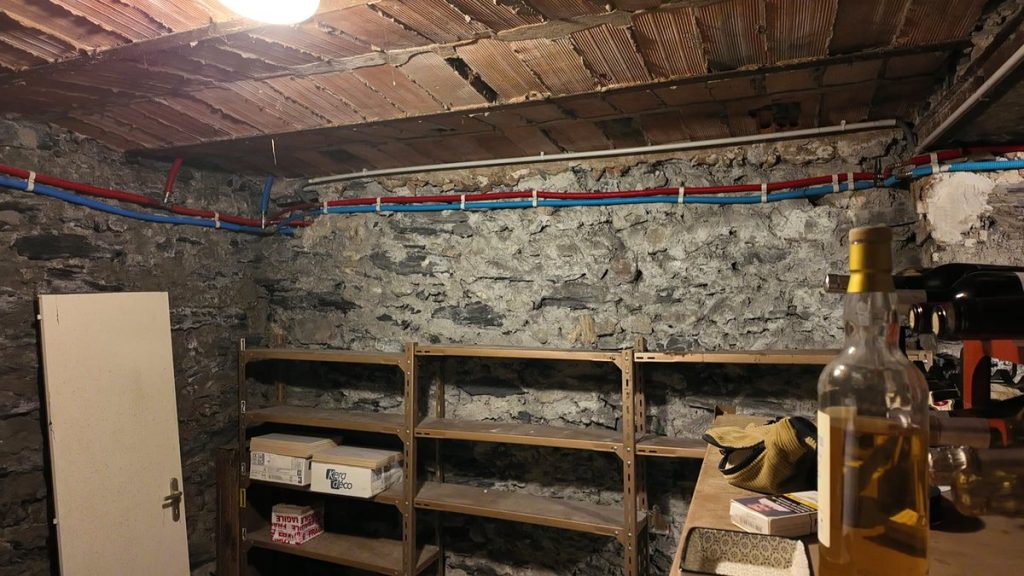
Measure first: a min/max thermometer and a hygrometer, read across all four seasons. An October check shows you neither the August heat nor the January cold, and in much of the US a closet or garage that feels fine in spring will bake in summer. Then pick one of three paths:
Your basement passes
Cool and stable all year: you can buy wines to age. Plan racks before you buy.
It does not
Get a wine fridge built for long-term storage, not just a serving cooler, and keep it out of a hot garage.
Or skip long aging
Focus on wines that drink well young and keep them in the coolest, darkest spot you have.
Yann Rousselin puts numbers on this. In a poor space, bright and around 68 °F all year, he suggests 95 % wines to drink young and none for long aging. In a decent cellar, 80 % young wines, 15 % mid-term and 5 % long-term. In a very good cellar, dark, cool and at 70 % humidity, wines to age can reach 80 %, half of them for the long haul.
How many bottles to start with
No delusions of grandeur. As the French channel Chais d'oeuvre points out, 2,000 bottles is three or four bottles a week for ten years. A smaller, varied cellar with wines at their best beats a big one. The right size comes from what you drink:
An example from a French winemaker on the channel Minute Cuisine: 40 wines drunk within 2 years (80 spaces), 10 mid-term wines kept 5 years (50 spaces) and 10 age-worthy wines kept 10 years (100 spaces). That is 230 spaces for 60 bottles a year. The wines you age turn over slowly: they are the ones that take up room.
To start, about 40 bottles covers several months of meals and a few occasions. That is what I did: 1,016 euros for 42 bottles, about 24 euros a bottle on average.
How to choose the wines
The question to ask before any other comes from sommelier Cyril Brun: why is this bottle in my cellar? If you cannot answer, it has no place there. It became the rule of my whole order.
Your taste
Acidity and freshness, or tannin and power? It is harder to put into words than it sounds. Think about the people you drink with too.
Your cooking
If you grill steak all summer and never cook fish, the crisp whites will stay at the back of the rack.
Your appetite for surprise
Do you like to be surprised, or do you prefer safe bets? Leave room for one or the other.
Your level
French critic Jacques Dupont (Le Point) advises beginners to buy expressive, typical, inexpensive wines: they are the ones that train your palate.
To find the bottles themselves, the same leads work everywhere: taste whenever you can and photograph the label of every wine you like, read the wine press and serious guides, follow passionate people on YouTube, ask a good wine shop, go to tastings, then pull the thread from a bottle you loved to its producer, region and grape. For US buyers, two local habits help: winery wine clubs, which ship new releases and older library wines, and tasting rooms, where you can try before you buy a case. Check what your state allows before ordering online; shipping rules differ from one state to another.
How to split your collection
A balanced cellar works like a portfolio. Five criteria come up in every source, in this order of importance.
| Criterion | Benchmark | Source |
|---|---|---|
| Type | 50 % red, 30 % white, 10 % sparkling, 5 % rosé, 5 % sweet. A guide, not a rule: adjust to your taste and where you live. | Yann Rousselin, Vino Lovers |
| Aging | Drink young (0 to 3 years), keep (3 to 10), long aging (10+). Two thirds to drink now, one third to keep. | Jacques Dupont, Yann Rousselin, Vino Lovers |
| Price | A few premium bottles for big occasions, plenty of good everyday wines. | Domaine Chanzy, Chais d'oeuvre |
| Style and origin | Vary styles, regions and grapes, even if you love one appellation. | Yann Rousselin, Vino Lovers, Domaine Chanzy |
| Format | A few magnums: festive when you host, and wine ages better in them. | Vino Lovers |
With 1,000 euros, spreading all this over four colors gives no depth to any of them. So I made a deliberate choice: 100 % red, which is what I drink most, split by style, because each style matches a moment. You do not drink the same red with friends before dinner and with a slow-cooked dish for two.
The same split works with American wines. A few examples per slot: light, Oregon Pinot Noir, cru Beaujolais or a chilled Gamay from California; versatile, Côtes du Rhône, Sonoma Zinfandel or Chianti Classico; structured, Paso Robles Rhône blends, Washington Syrah or Rioja Reserva; to age, serious Napa Cabernet, classified Bordeaux, Barolo or Northern Rhône Syrah. Our drinking window chart gives the aging range for each.
My 20 % to age will not be opened before the follow-up video in a year. The gap with Jacques Dupont's third is deliberate: I wanted bottles to drink first.
Buying the bottles
- Set a budget, then a yearly budget. Do not walk into the aisles with no plan, says Jacques Dupont. Decide what you spend, then plan to replace what you drink: a living cellar is topped up every year.
- Taste before buying in quantity. Domaine Chanzy suggests trying a few bottles at different prices over several evenings and buying in quantity only the one you like.
- Two or three bottles per wine. Enough to open one before its theoretical peak and follow how it develops, without stacking whole cases: your taste will change.
- Keep it cool in transit. No boxes in a hot car trunk, no deliveries in a heat wave. Let bottles rest before opening.
- Check the seller. Avoid bottles that sat in a sunny window. For an older vintage, prefer a seller who documents storage, and look at the fill level.
I bought everything online from three French merchants in one afternoon: order placed on a Thursday, eight boxes delivered on the Saturday morning.
My 1,000-euro cellar in numbers
Here is the method applied to a real budget. The amounts are from my receipts, in euros, at French prices.
| Price per bottle | Bottles | Examples |
|---|---|---|
| Under 15 euros | 10 | Les Darons by Jeff Carrel (7.50), Le Temps est venu by Stéphane Ogier (11.50), Les Sorcières from Clos des Fées (14) |
| 15 to 30 euros | 23 | Bourgogne from Sylvain Pataille (24.90), Cuvée du Chaos from Yann Bertrand (25), Laïs from Olivier Pithon (22.50) |
| Over 30 euros | 9 | Les Quartz from Clos du Caillou (62), Marsannay from Sylvain Pataille (35.90), Sancerre rouge from Domaine Vacheron (32) |
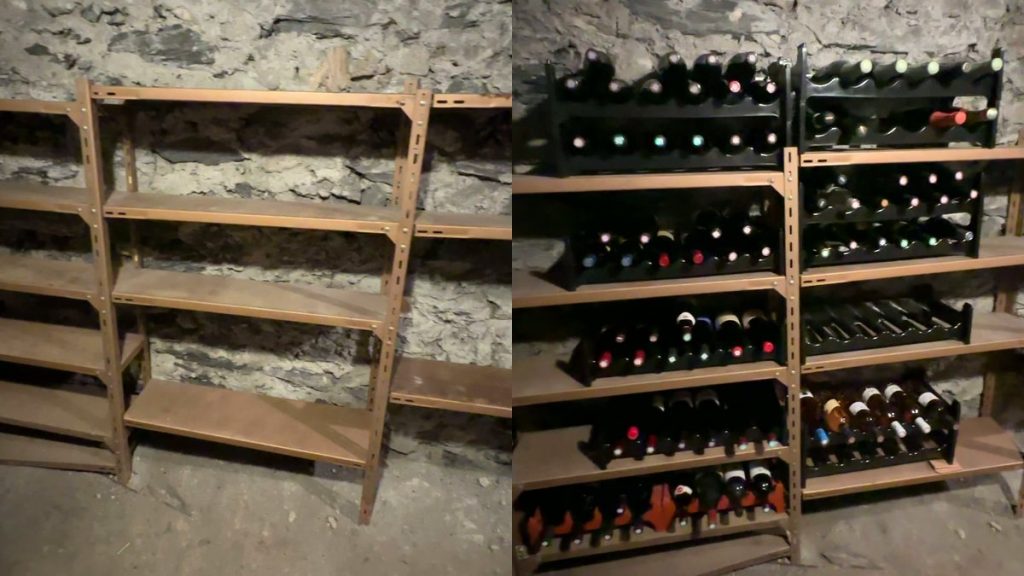
Honest first verdict: I did not have enough mature wines to drink right away, and instead of one of my four Châteauneuf-du-Pape I might have picked a great bottle from another appellation. French wines cost more in the US than at home, so a 1,000-dollar version of this cellar would have fewer bottles or more American ones. The method does not change.
Organizing and tracking the cellar
A messy cellar means bottles forgotten too long and others you forget to replace. Three habits are enough.
Young in front, keepers at the back
Near the door, wines to drink within three years. At the back, undisturbed, those to keep five years or more.
Taste before the peak
For a wine given 10 to 15 years, open a first bottle around year 5. Still closed, the others wait. Already open, drink them soon.
Write down what you drink
At 50 bottles you remember everything. Past 100 or 200, you do not: date, bottles left and a few words each time.
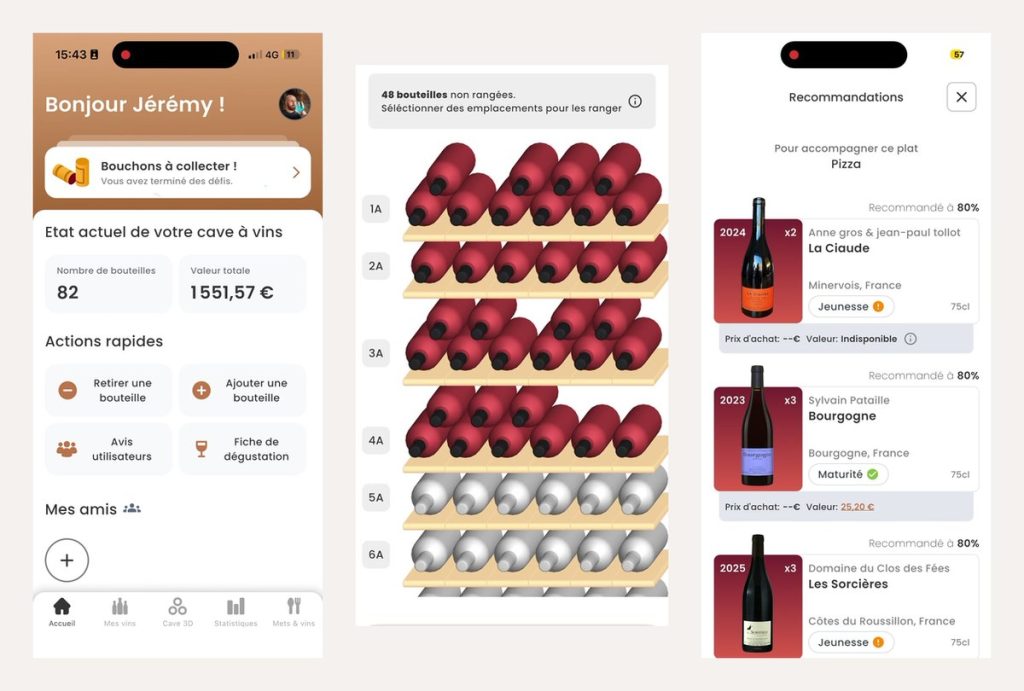
For tracking I used Oeni, the app partnering on the video, for a month. Adding wines by text search is fast, by photo slower, the price estimates do their best, and the youth, peak and decline phases looked right to me. One benefit I did not expect: my partner could pick the evening's wine in the app, when before she did not even know what we had. My full test is in our Oeni review, other options are in our comparison of wine cellar apps, and if you prefer a spreadsheet, start from our wine inventory spreadsheet. The promo code VINABOX gives 3 months free, then 40 % off the annual subscription for as long as you stay subscribed: details on our Oeni promo code page.
One month later: what I take away
I opened five bottles during the test month and rated them in the app, out of 5: Sylvain Pataille's Bourgogne 2023 (4.1), Yann Bertrand's Cuvée du Chaos from Fleurie (4.0), Les Hauts de Smith 2019 from Pessac-Léognan (3.9), Olivier Pithon's Laïs 2020 (3.8) and Les Sorcières from Clos des Fées (3.7).
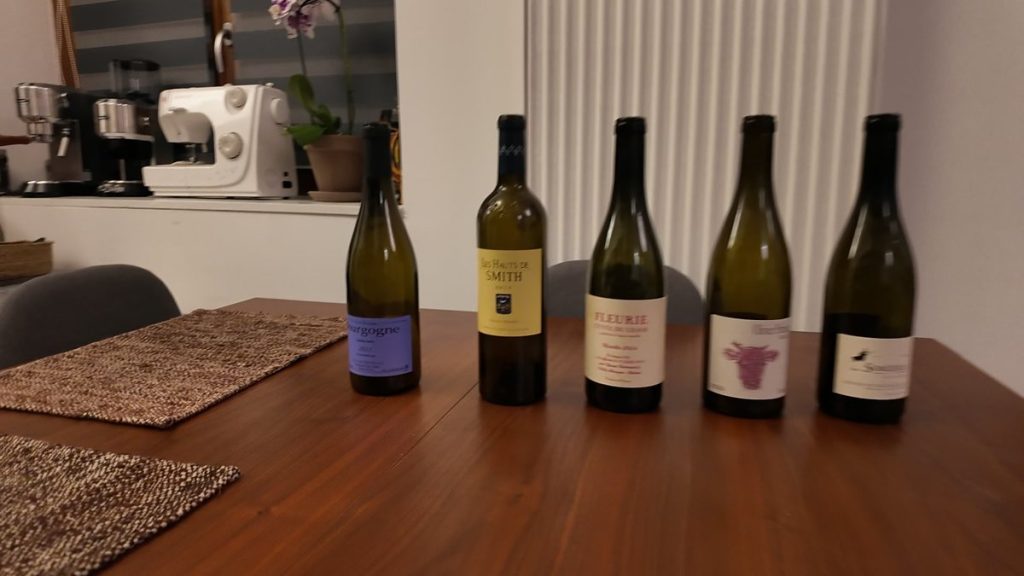
Having good bottles makes you want to open them. At the same time you feel responsible for the stock and do not want to burn through it for no reason. Both feelings live side by side, and that is rather healthy.
Above all, the exercise showed me what is missing: whites, Champagne, a few sweet wines, more Bordeaux, Northern Rhône, Loire, Alsace, Italian and Spanish wines. I could easily have spent five to ten times more. The goal now is more modest: keep the cellar at about this level, in bottles and in value, and restock before the holidays. The follow-up comes in a year, with the bottles to age still unopened.
Frequently asked questions
How many bottles do I need to start a wine collection?
About 40 bottles is enough to start, two or three of each wine. To size it properly, multiply the bottles you drink per year by how long you keep them: 60 bottles a year, part of them aged, needs about 230 spaces in the long run.
How much should I spend to start a wine cellar?
There is no minimum, but set the budget in advance, then a yearly budget to replace what you drink. With 1,000 euros I bought 42 bottles of French red, about 24 euros a bottle on average, from 7.50 to 62 euros.
What mix of red, white and sparkling wine?
The most quoted benchmark is 50 % red, 30 % white, 10 % sparkling, 5 % rosé and 5 % sweet, adjusted to your taste and cooking. For aging, two thirds to drink now and one third to keep.
What temperature should a wine cellar be?
Around 54 to 57 °F (12 to 14 °C), with as little variation as possible. Humidity around 70 to 75 % keeps corks in good shape.
Can I start a collection without a basement?
Yes. A wine fridge designed for long-term storage recreates good conditions. Without one, buy mostly wines that drink well young and skip long aging.
Track your new cellar with Oeni
Code VINABOX: 3 months free, then 40 % off the annual subscription while you stay subscribed.
Keep going: our wine cellar management guide covers the rest, and how to store wine at home covers the storage side.
Sources
The advice in this guide comes from these videos and articles, watched and read in October 2026. All are in French unless noted.
- Jacques Dupont, Le Point: building a cellar (2013)
- Yann Rousselin, Le COAM: choosing wines for your cellar, the two principles (2020)
- Yann Rousselin, Le COAM: the method for choosing your cellar's wines (2019)
- Nadia Fournier: neither hot nor cold, the wine cellar (2022)
- Vino Lovers: filling and managing your wine cellar (2020)
- Franck Bernard, Tell me wine: what makes a good cellar (2017)
- Chais d'oeuvre: managing your wine cellar well (2018)
- Minute Cuisine: designing and managing a wine cellar (2013)
- Cyril Brun: how to build your wine cellar (2024)
- Domaine Chanzy: la Minute Chanzy no. 22, building your cellar (2021)
- La Revue du vin de France: how to judge a wine's aging potential
- The original French guide on vinabox.fr, with the full list of my 42 bottles
Photos: Jeremy Degryse, filmed for the video, October and November 2026. Oeni screenshots from 19 October 2026.
Please drink responsibly. Alcohol is for adults of legal drinking age only.