
In short
- Most wine sold in Australia is made to drink within one to three years. Cellaring it longer adds nothing.
- The styles that reward patience are few and well known: Hunter Semillon, Clare and Eden Valley Riesling, serious Shiraz and Cabernet Sauvignon.
- A screwcap does not shorten a wine's life. Heat does. A decade-long plan only works with cool, steady storage.
- Give every bottle you keep a "drink from" and "drink by" year, then taste one early and adjust.
How long should you cellar a wine? For most bottles, not long at all: one to three years from the vintage on the label, and less for fresh whites. An age-worthy wine is the exception, and Wine Australia defines it precisely as one that not only endures but improves over five to 10 years or more.
This guide gives typical cellaring ranges for Australian styles first, then for the imports you are most likely to put away. It covers unopened bottles only.
Oeni is a paying partner of Vinabox. Oeni did not review or approve this page.
Wine cellaring guide: Australian styles
These ranges are counted from the vintage and describe good examples, stored well. The statements in the middle column come from Wine Australia's educator guide on aged wine. Where your bottle carries the maker's own advice, use that first.
| Style | Typical cellaring | How to use it |
|---|---|---|
| Everyday reds, whites and rosé | 1 to 3 years | Buy to drink. This covers most of the bottle shop. |
| Sauvignon Blanc, Pinot Grigio, light sparkling | 1 to 2 years | Freshness is the point. Do not put these away. |
| Hunter Valley Semillon | Some examples: well over 20 years | Zesty when young, honeyed and toasty with age. Worth buying by the half-dozen. |
| Riesling (Clare Valley, Eden Valley, Tasmania) | Decades for the best; good Eden Valley wines peak after 10 years or more | Drink young for lime and florals, or wait for toast. The middle years can be quiet. |
| Margaret River Chardonnay | May be ready after 5 to 10 years, then a short window | Check it often once it starts to open. |
| Pinot Noir (Yarra Valley, Mornington Peninsula, Tasmania) | Some high-quality examples: 10 to 15 years | Many gain less from age than Shiraz or Cabernet. Be cautious without the maker's advice. |
| Shiraz (Barossa, McLaren Vale and beyond) | Many styles: 2 to 5 years. Age-worthy wines: up to 20 years; premium examples far longer | The widest spread of any variety. Judge the bottle, not the region. |
| Cabernet Sauvignon (Coonawarra, Margaret River, Yarra Valley) | Decades. A high-quality Coonawarra may take 20 years to peak and hold for a decade or more | The classic long-haul red. Yarra Valley examples: 10 to 20 years and beyond. |
| Grenache and Shiraz Cabernet blends | Top Grenache: 10 years or more. Shiraz Cabernet: several decades for the best | The Shiraz Cabernet blend is an Australian speciality built to last. |
Two things stand out. Australia's longest-lived wines include whites, which surprises people who assume only tannic reds can age: Semillon and Riesling do it on acidity. And Shiraz, the national grape, is mostly an early drinker. For the styles behind those names, see our guides to Australian Shiraz and Clare and Eden Valley Riesling.
No. Wine Australia notes that wine under screwcap is thought to mature more slowly than wine under cork, because an undamaged cap limits the oxidation an imperfect cork can let in. Many of the country's most age-worthy Rieslings are sealed that way.
Classic imports: how long to keep them
| Wine | Typical range after the vintage |
|---|---|
| Burgundy, village level and good Pinot Noir | 3 to 10 years |
| Premier and grand cru Burgundy | 8 to 20 years |
| Classified-growth Bordeaux | 10 to 30 years |
| Barolo and Barbaresco | 10 to 25 years |
| Rioja Gran Reserva | 10 to 25 years |
| German Riesling (Spätlese, Auslese) | 10 to 30 years |
| Champagne | Non-vintage: 1 to 3 years after release. Vintage: 5 to 15 years |
| Vintage Port | 20 years and more |
These are typical ranges that producer, vintage and storage move in both directions. A modest Bordeaux belongs in the everyday row, not the classified-growth one.
The four stages every cellared wine goes through
A drinking window is easier to manage once you know what it describes. Wine Australia breaks a wine's life in bottle into four stages, and notes that the journey is not linear: wines go through bursts of change, quiet periods and plateaus.
Youth
Bright colour, primary fruit, acidity and tannin at their peak. Oak can stand apart from the fruit.
Evolution
More complexity, still fresh. Tannins and acidity soften. Whites deepen in colour, reds lighten toward brick.
Maturity
Everything in balance: the best time to drink. A wine may hold here for years, but it will not improve further.
Decline
Aromas simplify, flavours dull, texture turns watery. Nothing brings a wine back from here.
"Drink from" is roughly where evolution turns into maturity. "Drink by" is your guess at the end of maturity. The first date matters less than the second: a wine opened a little early still gives pleasure, a wine opened too late does not.
Signs a bottle is ready, or running out of time
- Ready: tannins feel supple, the fruit has gained savoury notes (leather, earth, cedar in reds; toast and honey in whites), and nothing sticks out.
- Still closed: hard tannin, sharp acidity, oak sitting on top. Wait, and try the next bottle in a year or two.
- Fading: browning colour, flat fruit, a short finish. Drink the rest soon.
You only learn this by opening bottles, which is the argument for buying three or six of anything you cellar. Bottle size counts too: half bottles age faster than standard bottles, and magnums more slowly, because the proportion of air to wine is different.
How storage moves the window
Every range on this page assumes cool, steady storage. Wine Australia's conditions for long-term cellaring are a consistent 13 to 16°C, about 70% humidity and darkness. The Australian Wine Research Institute warns that storage above 25°C for long periods can affect quality. A Coonawarra Cabernet with a 20-year plan will not get there in a garage in Adelaide or Perth.
Shortens the window
Summer heat, daily temperature swings, a warm cupboard, and any time the bottle spent in a hot car or a delivery van.
Protects the window
A wine fridge or professional storage, bottles kept still and dark, and corks kept moist by storing those bottles on their side.
If you do not know how a bottle was kept before it reached you, plan around the early end of its range. The conditions themselves are covered in our guide to storing wine in an Australian home.
How to keep track of drinking windows
A window you cannot find again is no use. In a spreadsheet, add two columns to your wine list, "drink from" and "drink by", entered as years, plus a column for where the estimate came from: the winery, a merchant, or this chart. Sort by "drink by" a few times a year and the bottles that need attention rise to the top.
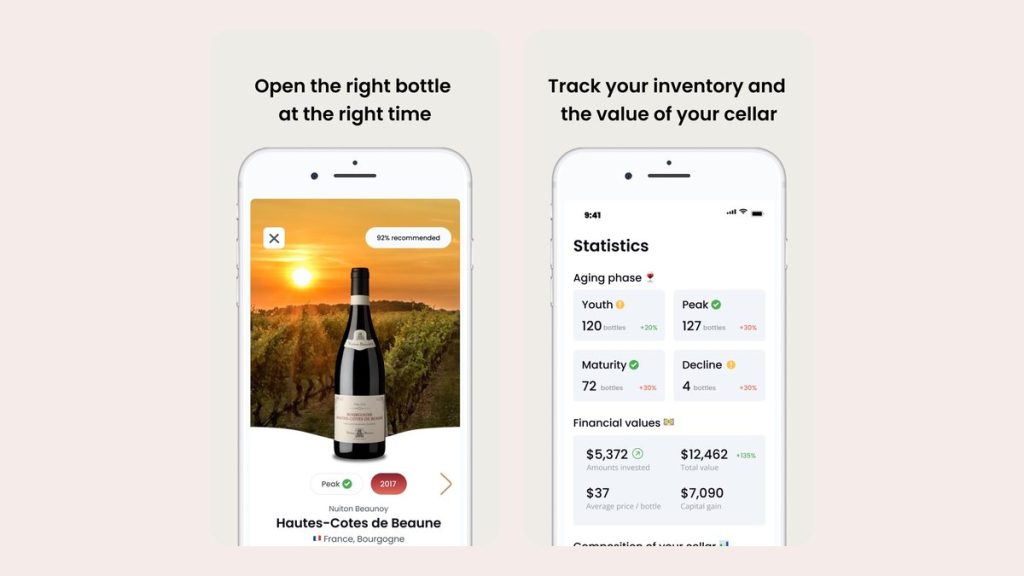
An app can do the sorting for you. For most home cellars we recommend Oeni: its paid tier, Oeni Plus, assigns each wine an ageing phase (youth, maturity, peak, decline) and sends maturity alerts. Those phases are generic estimates that do not know how your bottles are stored, and Oeni's own blog acknowledges possible gaps for very small producers and wines from outside Europe, so check how it handles your Australian labels. Adding bottles is free, Oeni Plus can be tried free for 30 days, once per person, and the current price is shown in the app or the store.
From their store listings and websites: CellarTracker shows community and professional drinking windows, with extended coverage and drinkability alerts for subscribers; InVintory's free plan includes drinking windows on selected wines; in Vivino's free Cellar feature you enter the window yourself. The full method, from first list to monthly check, is in our guide to wine cellar management in Australia.
Related guides
- Wine cellar management in Australia
- How to store wine in an Australian home
- Cabernet Sauvignon in Australia
- Chardonnay in Australia: styles, regions and food
Sources
- Wine Australia: Aged Australian wine, educator guide (PDF)
- Australian Wine Research Institute: transport and storage of bottled wine
- WSET: wine storage guidance
- Oeni FAQ
Australian ranges are quoted from Wine Australia's guide; import ranges are typical values for well-stored bottles. Images: cellared bottles by daryl_mitchell, CC BY-SA 2.0, Wikimedia Commons (cropped); app screens from the Oeni App Store listing.
Wine cellaring FAQ
How long can you cellar Shiraz?
It depends on the style. According to Wine Australia, many Australian Shiraz styles are made for drinking within two to five years, while age-worthy wines can develop for up to 20 years and premium examples for far longer. Follow the producer's advice for the bottle in your hand.
Do screwcap wines age?
Yes. Wine under screwcap is thought to mature more slowly than wine under cork, because an undamaged cap reduces the oxidation that an imperfect cork seal can allow. The closure tells you nothing about a wine's ageing potential; the wine does.
Which Australian wines are best for cellaring?
Wine Australia lists Semillon, Riesling, Chardonnay, Pinot Noir, Shiraz and Cabernet Sauvignon as the key age-worthy varieties, with three styles of exceptional longevity: Hunter Valley unoaked Semillon, Shiraz Cabernet blends and Rutherglen Muscat, which does its ageing in barrel before bottling.
How do I know when a cellared wine is ready to drink?
Open one. A wine at maturity feels balanced: softer tannin and acidity, with savoury notes added to the fruit. If it is hard and closed, wait. If the colour is browning and the fruit is flat, drink the remaining bottles soon. This is why buying several bottles of a wine you plan to cellar is worth it.
Can I cellar wine without a wine fridge in Australia?
For a year or two, in the coolest internal cupboard of the house, yes. For the long ranges on this page you need storage that stays cool through summer: a wine fridge or a professional facility. Sustained heat above 25°C shortens any drinking window.
Track your drinking windows in Oeni
Free download, with a 30-day trial of Oeni Plus, once per person.